

There’s something truly nourishing about a warm bowl of Miso Soup, especially on a chilly evening. As the fragrant dashi broth simmers away, the enticing aroma of umami fills the room, pulling you into a cozy embrace that feels like a hug in a bowl. I discovered this recipe on a quest to escape the mundane cycle of fast food, and the delightful blend of silky tofu, vibrant greens, and rich miso made my kitchen feel like a serene Japanese izakaya.
What I love most about this Traditional Japanese Miso Soup is its incredible simplicity—perfect for busy weeknights or when friends drop by unexpectedly. With a few fresh ingredients and minimal prep, you can create a dish that not only warms your body but also delights your taste buds. Whether enjoyed as a light starter or a comforting main, this gluten-free and vegetarian option is sure to become a favorite in your home. Let’s dive in and discover how to make this beloved classic—your taste buds will thank you!
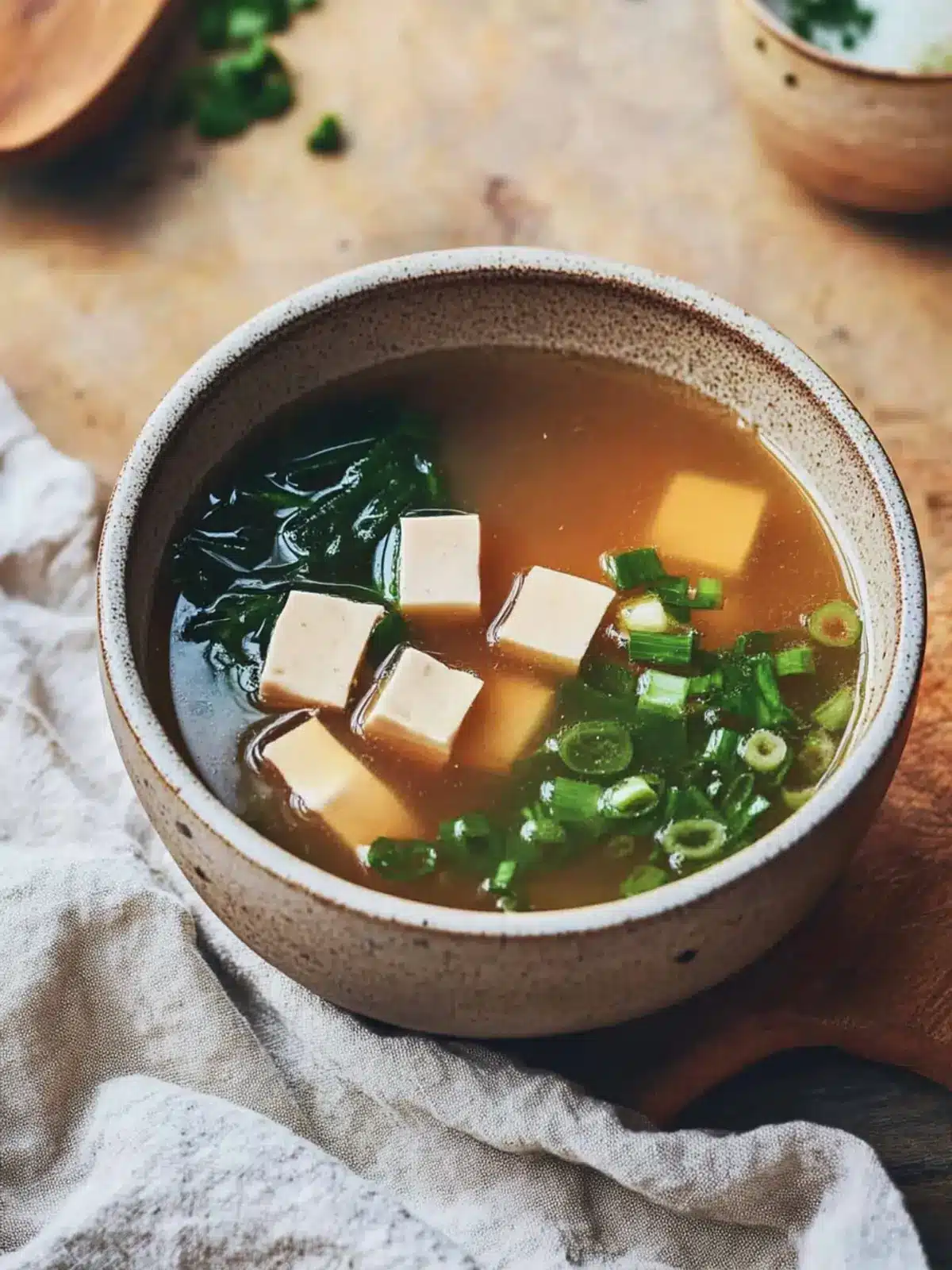
How to Make Miso Soup easily?
Simplicity is key: This recipe requires minimal cooking skills, making it accessible for anyone.
Umami Delight: The unique combination of miso, dashi, and fresh ingredients creates an irresistible flavor profile.
Nutrient-Packed: Packed with protein from tofu and vitamins from greens, this dish is as healthy as it is satisfying.
Versatility: Feel free to customize with your favorite veggies or miso types, ensuring every bowl is uniquely yours.
Quick to Prepare: Within just 20 minutes, you can have a pot of comforting soup ready to warm your soul.
Serve it alongside sushi or pickled vegetables for a complete meal that impresses every guest!
How to Make Miso Soup Ingredients
• Embrace the essence of homemade Miso Soup with these fresh, simple ingredients!
For the Broth
- Dashi – A warm, umami-rich base; opt for homemade using bonito flakes and kombu for an authentic taste.
- Nori – Adds a hint of ocean flavor; can be replaced with dried wakame seaweed for a similar effect.
For the Soup
- Miso Paste – Provides the signature savory touch; use red miso for a robust flavor or yellow/white for something lighter.
- Green Chard – Offers a nutritious green element; feel free to swap it with spinach, kale, or other leafy greens that you love.
- Green Onions (Scallions) – Brightens the dish with freshness; shallots or leeks work as excellent substitutes.
- Firm Tofu – Supplies protein and a nice texture; silken tofu provides creaminess if that’s your preference.
Optional Add-ins
- Mushrooms – Shiitake or cremini add an extra layer of depth; toss them in for a heartier soup.
- Carrots – Thinly sliced, they lend a touch of sweetness and color to your soup; a delightful addition!
With these ingredients in hand, you’re well on your way to mastering how to make a warm and comforting bowl of Miso Soup that brings joy to every supper!
How to Make Miso Soup
- Heat Dashi: Pour 4 cups of dashi into a medium saucepan, place over medium-high heat, and wait until it gently simmers. Be careful not to boil it, as this preserves the rich umami flavor.
- Add Vegetables & Tofu: Gently stir in chopped green chard, sliced green onions, and cubed firm tofu. Cook for about 3-5 minutes, until the greens are tender and vibrant.
- Incorporate Nori: Cut the nori into thin strips and stir them into the simmering soup. You’ll notice an enticing aroma, transporting you straight to a cozy Japanese kitchen.
- Dissolve Miso: In a separate small bowl, mix 4 tablespoons of miso paste with a bit of hot dashi to create a slurry. Stir this back into the pot, ensuring it blends seamlessly.
- Finish Cooking: Remove the pot from heat to avoid boiling after adding the miso. Taste and adjust seasoning with more miso or a pinch of sea salt as desired.
- Serve Warm: Ladle the soup into bowls, admiring the array of textures and colors, and enjoy this comforting dish warm!
Optional: Garnish with additional green onions for enhanced flavor and freshness.
Exact quantities are listed in the recipe card below.
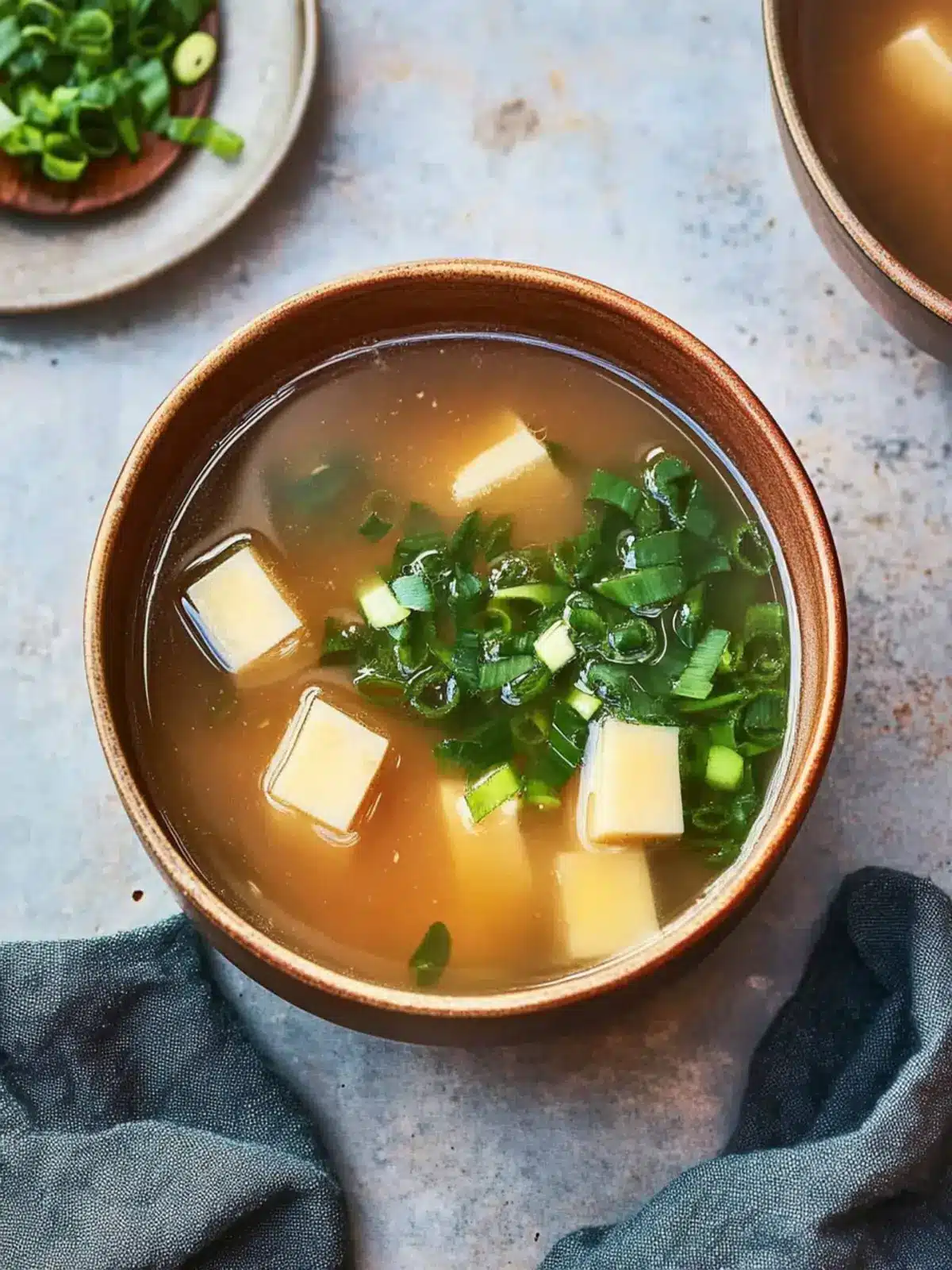
Expert Tips for Miso Soup
- Perfect Temperature: Always avoid boiling the soup after adding miso to maintain its delicate flavor and nutritional integrity.
- Customize Greens: Feel free to mix leafy greens like spinach or kale, but ensure they’re tender for that ideal texture in your miso soup.
- Miso Types: Experiment with different types of miso paste—red, yellow, or white—to discover your favorite flavor depth in this miso soup.
- Storage Wisdom: Store any leftovers in an airtight container and consume within 2-3 days, reheating gently over low heat for the best taste.
- Enhance Umami: Consider adding dried mushrooms, such as shiitake, during cooking to elevate the umami richness of your miso soup.
Make Ahead Options
Miso Soup is perfect for meal prep enthusiasts looking to save time on busy weeknights! You can prepare the dashi broth and chop the green chard, green onions, and tofu up to 24 hours in advance, storing them separately in the refrigerator to maintain freshness. Additionally, you can dissolve the miso paste in a small amount of hot dashi and refrigerate it for easy incorporation later. When you’re ready to savor your homemade Miso Soup, simply heat the dashi, add the prepped ingredients, and finish with the nori and dissolved miso. This way, you’ll enjoy a comforting bowl of soup that’s just as delicious as if made from scratch!
Miso Soup Variations
Feel free to get creative with your Miso Soup to suit your taste buds and dietary needs!
-
Silken Tofu: Swap firm tofu for silken tofu to achieve a creamier, softer texture that melts in your mouth.
-
Extra Veggies: Add shiitake mushrooms, shredded carrots, or chopped bok choy for a nutritious boost, enhancing both the flavor and appearance of your soup.
-
Vegetable Stock: Use vegetable stock instead of dashi for a completely vegetarian version, infusing your soup with plant-based goodness.
-
Spicy Kick: Introduce a dash of chili flakes or a few slices of fresh jalapeño for a delightful heat that elevates the soup’s flavor profile.
-
Coconut Milk: For a tropical twist, stir in a splash of coconut milk, lending creaminess and a subtle sweetness that complements the savory miso.
-
Ginger Zing: Grate fresh ginger into the soup while cooking for a warming spice that brightens up the umami-rich broth.
-
Sesame Oil: Drizzle a bit of toasted sesame oil before serving to enhance the nutty flavor and add a luxurious finish.
-
Herb Infusion: Garnish with fresh cilantro or basil to add freshness and a burst of aroma, transforming your Miso Soup into a vibrant experience.
What to Serve with Traditional Japanese Miso Soup with Tofu?
Miso Soup makes for a cozy centerpiece, perfectly complemented by delightful side dishes that enhance its comforting essence.
-
Sushi Rolls: The fresh flavors and textures of sushi rolls pair beautifully, providing a pop of vibrant ingredients alongside the umami soup.
-
Tempura Vegetables: Crispy tempura adds a crunchy contrast, elevating the dining experience with each flavorful bite.
-
Pickled Vegetables: These tangy delights cleanse the palate and offer an exciting textural variety to your meal.
-
Rice: A simple bowl of steamed rice harmonizes with the rich miso, providing a satisfying foundation for enjoying every spoonful.
-
Sesame Spinach Salad: The tender greens and nutty sesame dressing complement the soup’s warmth, infusing the meal with vibrant flavors.
-
Edamame: A light and protein-packed snack, these green beans are perfect for balancing the savory miso with their fresh taste.
-
Chilled Sake: This smooth and refreshing drink enhances the dining experience, complementing the delicate flavors of your meal.
-
Fruit Sorbet: A light sorbet offers a refreshing finish after the rich soup, cleansing the palate and leaving you with a sweet note.
Storage Tips for Miso Soup
Fridge: Store any leftover Miso Soup in an airtight container and keep it in the refrigerator for up to 2-3 days.
Freezer: If you want to store it for longer, freeze the soup in individual portions in freezer-safe containers for up to 2 months.
Reheating: When ready to enjoy, reheat gently on the stove over low heat. Avoid boiling to preserve the delicate flavors and nutritional benefits of the miso.
Cooling: Let the soup cool to room temperature before refrigerating or freezing to ensure the best texture and taste upon reheating.

Traditional Japanese Miso Soup with Tofu Recipe FAQs
What type of dashi should I use for Miso Soup?
For the best flavor, I recommend using homemade dashi made with bonito flakes and kombu. However, if you’re short on time, store-bought dashi will work just fine, as it will give your soup that rich umami flavor we’re all craving.
How do I store leftover Miso Soup?
Store any leftover Miso Soup in an airtight container in your refrigerator for up to 2-3 days. Make sure the soup has cooled to room temperature before sealing it up. When you’re ready to enjoy it again, gently reheat over low heat, stirring occasionally to keep the flavors consistent.
Can I freeze Miso Soup?
Absolutely! To freeze Miso Soup, let it cool completely, then pour it into freezer-safe containers in individual portions. You can freeze it for up to 2 months. When you’re ready to enjoy it, simply thaw in the refrigerator overnight and reheat gently on the stove without bringing it to a boil.
What is the best way to avoid a gritty texture in Miso Soup?
To ensure a smooth texture, always dissolve the miso paste separately before adding it to the soup. Mix it with a small amount of hot dashi in a bowl until it’s fully dissolved, and then stir this mixture back into the pot. This method prevents any clumps and creates that velvety broth we love.
Can pets eat Miso Soup?
It’s best to avoid giving Miso Soup to pets due to its high sodium content and the inclusion of certain ingredients like tofu and seaweed, which may not be suitable for them. If you’re considering sharing soup with your furry friends, consult with your veterinarian first.
Are there any allergenic ingredients in Miso Soup?
Miso itself can contain soy, which is a common allergen. Be sure to choose a gluten-free miso paste if you have gluten sensitivities. Additionally, always check for any specific allergies related to the vegetables or tofu used in this recipe, as they can vary among individuals.
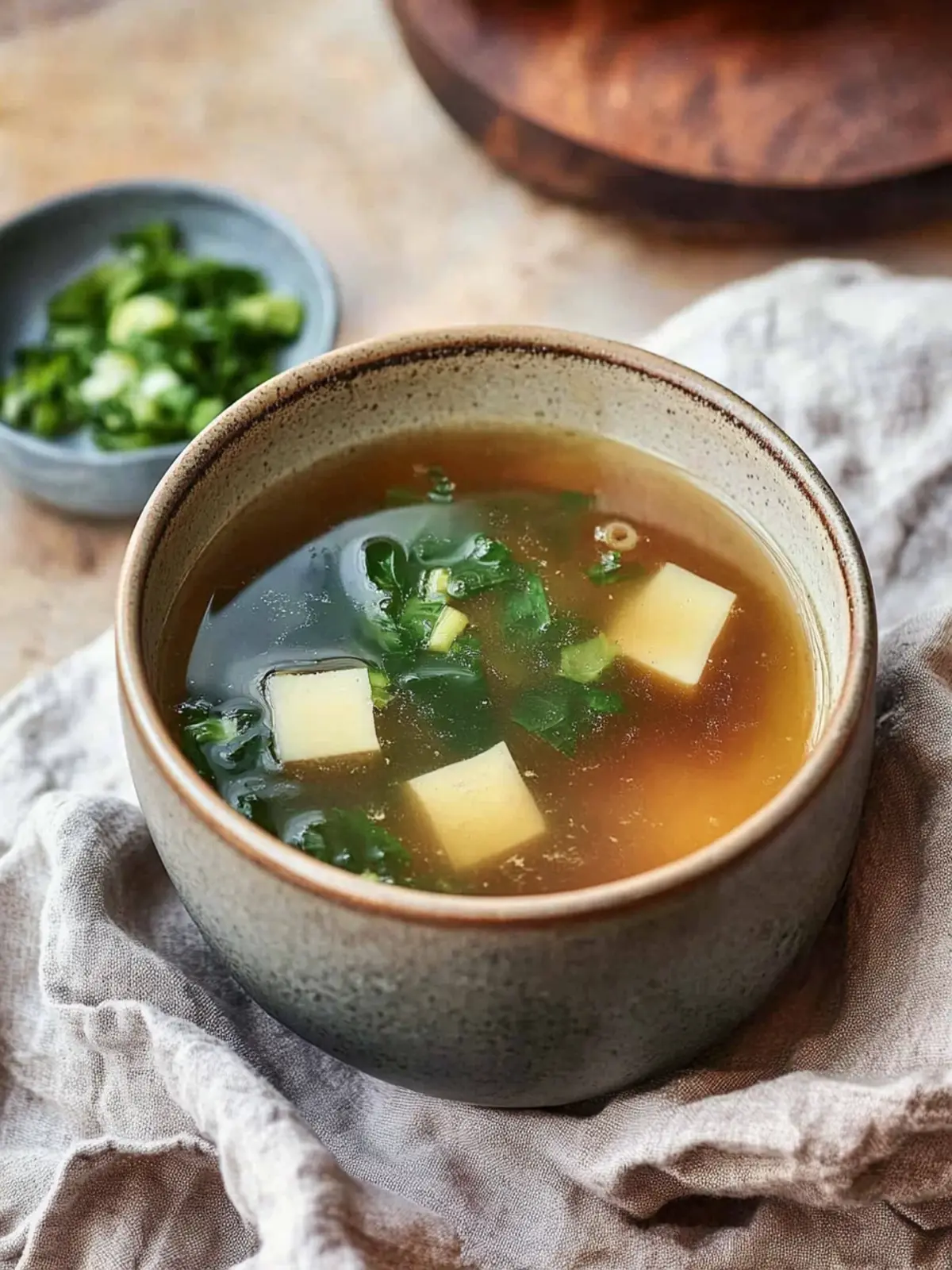
How to Make Miso Soup: A Cozy, Flavorful Comfort Bowl
Ingredients
Equipment
Method
- Pour 4 cups of dashi into a medium saucepan, place over medium-high heat, and wait until it gently simmers.
- Gently stir in chopped green chard, sliced green onions, and cubed firm tofu. Cook for about 3-5 minutes.
- Cut the nori into thin strips and stir them into the simmering soup.
- In a separate small bowl, mix 4 tablespoons of miso paste with a bit of hot dashi to create a slurry. Stir this back into the pot.
- Remove the pot from heat to avoid boiling after adding the miso. Adjust seasoning as desired.
- Ladle the soup into bowls and enjoy warm!