

The moment I took my first bite of Bibimbap, I was transported to the bustling streets of Korea, where vibrant colors and sizzling flavors dance together in perfect harmony. The joy of creating this Healthy Vegan Bibimbap at home, complete with a spicy homemade miso sauce, is an adventure I can’t resist. Each bowl brims with a delightful medley of colorful veggies, tender brown rice, and a kaleidoscope of nutrients that not only nourish the body but also the soul.
When I find myself in need of a quick, wholesome meal that bursts with flavor, this recipe becomes my go-to. Perfect for those hectic weeknights or meal prep days, it’s versatile enough to accommodate any veggie lover’s preferences. Plus, with just a sprinkle of sesame seeds and fresh herbs, it transforms into a dazzling centerpiece that impresses friends and family alike. Are you ready to explore the world of flavors in this simple yet satisfying dish? Let’s dive into making your own Healthy Vegan Bibimbap!
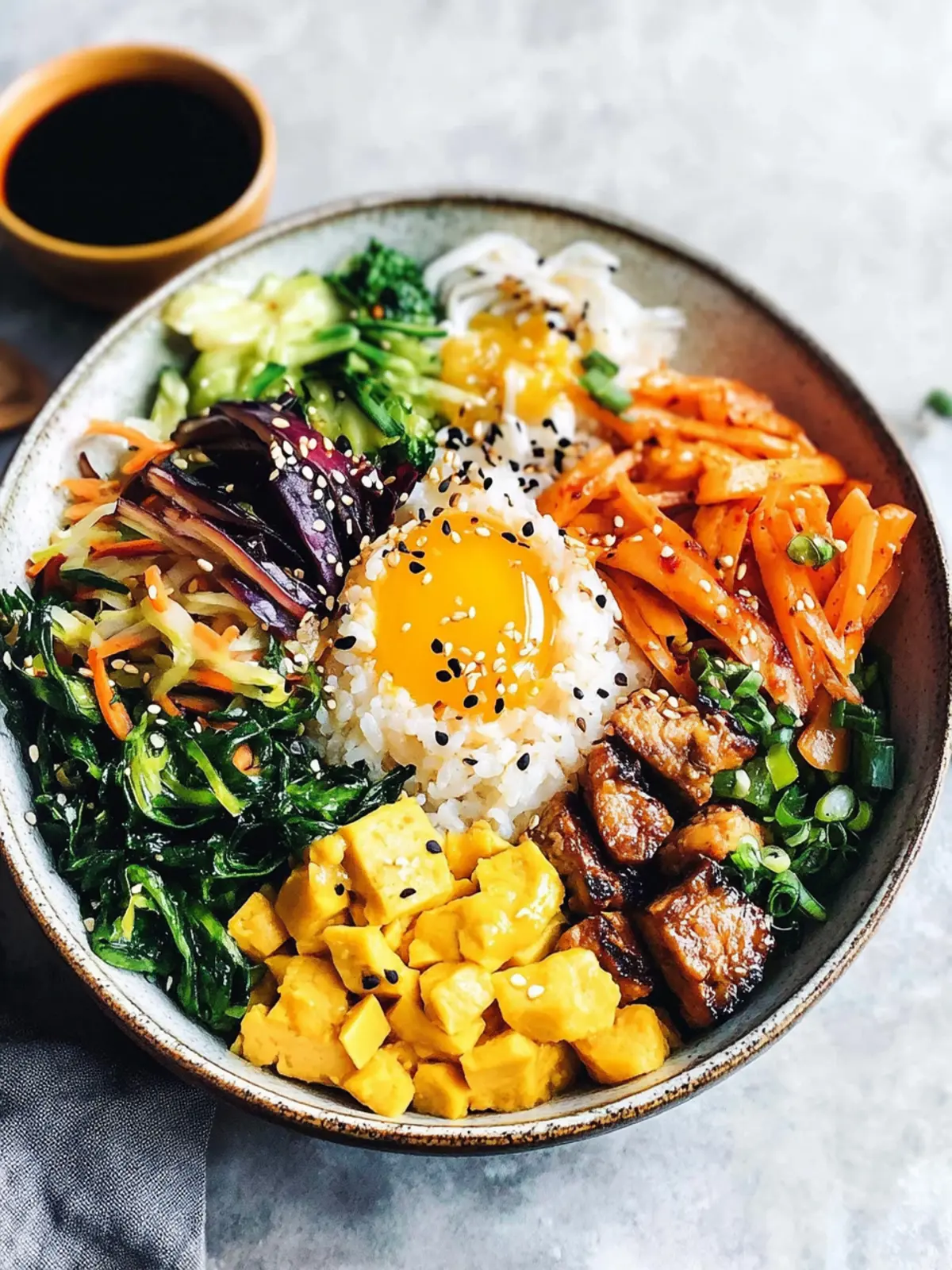
Why is Healthy Vegan Bibimbap a Must-Try?
Vibrant Colors: This dish is a feast for the eyes! Cheerful veggies create a rainbow of nutrients that make every bite a delight.
Nutrient-Packed: Loaded with vitamins, minerals, and fiber, this Bibimbap keeps you feeling full and energized, not sluggish.
Quick & Easy: Perfect for busy schedules, this recipe can be on your table in under 30 minutes. Use leftover rice for an even faster dinner.
Customizable Delight: Feel free to switch up the vegetables and toppings! Add your favorites or whatever you have on hand — the possibilities are endless.
Meal Prep Friendly: Make a batch ahead for effortless lunches or dinners throughout the week. Just store components separately and assemble when you’re ready!
Get ready for a delightful culinary experience with your own bowl of Healthy Vegan Bibimbap!
Healthy Vegan Bibimbap Ingredients
For the Rice Base
• Brown Rice – This hearty base provides essential carbohydrates; using pre-cooked rice can save you valuable time.
For the Veggies
• Kale – Adding it not only provides a satisfying crunch but also packs in nutrition; feel free to swap with spinach if desired.
• White Mushrooms – A low-calorie meat substitute that, when sautéed, delivers great flavor; shiitake or portobello mushrooms can create a richer taste.
• Carrot – Offers a sweet flavor and vibrant color; substitute with radishes for an extra crunch.
• Red Bell Pepper – The sweetness and crunch complement the dish perfectly; any bell pepper color will work beautifully.
• Red Cabbage – Adds a nice crunch and color; green cabbage or bok choy can easily stand in.
For the Miso Sauce
• Miso Paste – The star of your spicy miso sauce; try tahini or peanut butter if you’re in the mood for a twist.
• Water – Helps achieve the perfect sauce consistency; vegetable broth adds a delightful flavor boost.
• Rice Wine Vinegar – Introduces a zesty acidity; apple cider vinegar is a simple swap if needed.
• Fresh Ginger – Brings warmth and spice to the sauce; ground ginger will do, just use less.
• Cayenne – For those who like a little kick; adjust according to your heat preference.
• Garlic Clove – Enhances the overall flavor profile when minced for smooth incorporation.
For the Finish
• Fresh Cilantro – Provides a refreshing herbal finish; parsley can be an excellent substitute if you’re not a cilantro fan.
• Sesame Seeds – They add a delightful nuttiness and crunch; sunflower seeds can replace them for a different flavor.
Dive into making your own Healthy Vegan Bibimbap, where every ingredient plays a role in this vibrant and nourishing dish!
How to Make Healthy Vegan Bibimbap
-
Prepare the Rice: Cook the brown rice according to package instructions. Once done, set it aside so it can cool a bit and firm up while you prepare the rest of the ingredients.
-
Roast Kale: Preheat your oven to 400°F (200°C). Massage the kale with a pinch of salt and pepper, then spread it evenly on a baking sheet. Roast for about 10-15 minutes until it’s crispy and slightly browned.
-
Sauté Vegetables: In a medium sauté pan over medium heat, add the sliced white mushrooms. Season them with salt and pepper, cooking for about 6-8 minutes. Add the soy sauce in the last minute and stir until well combined.
-
Make Miso Sauce: In a small saucepan, combine the miso paste and water. Simmer on low heat for 3-5 minutes, stirring often. Add in lime juice, freshly grated ginger, and cayenne pepper until everything is nicely blended.
-
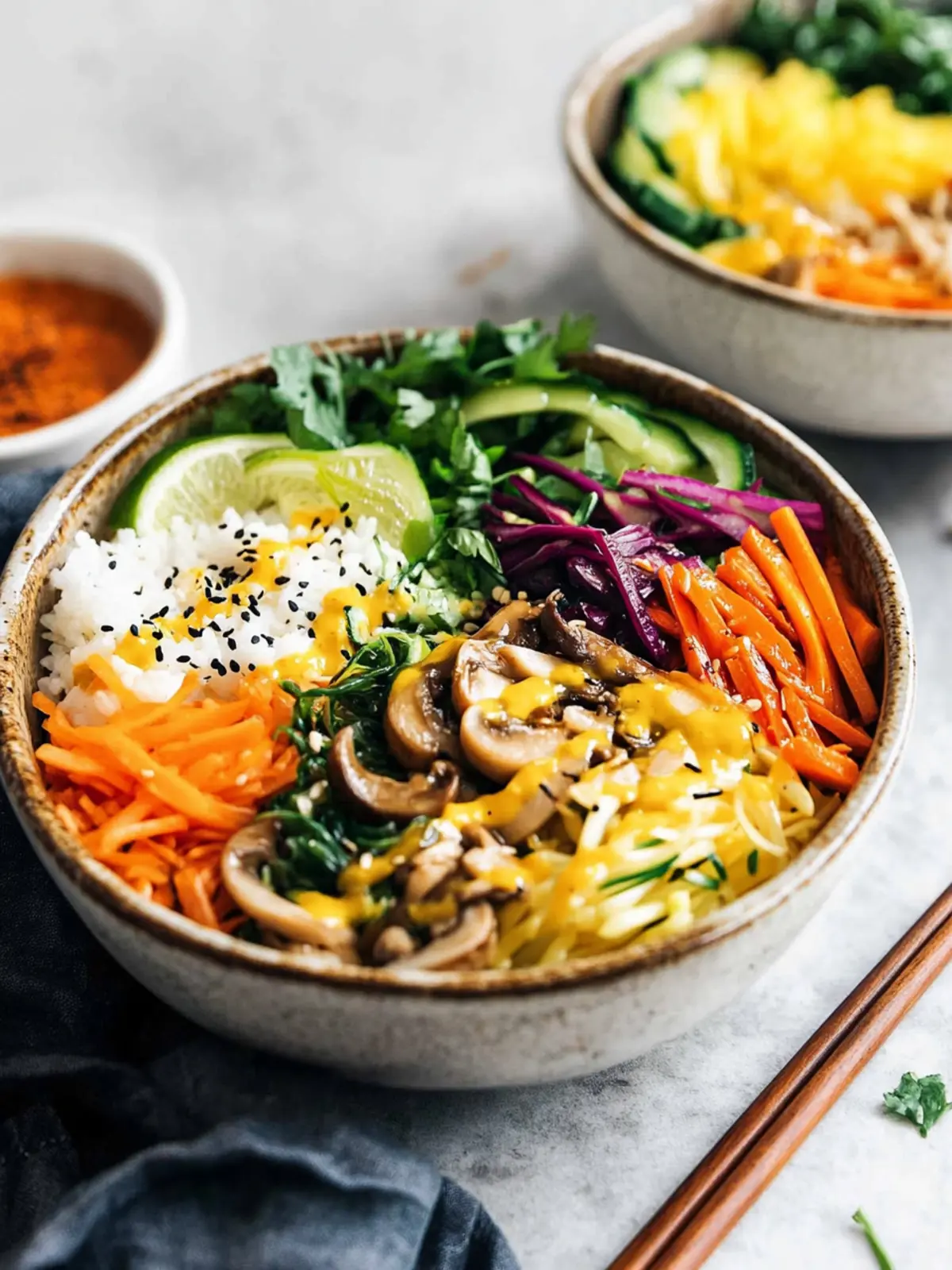
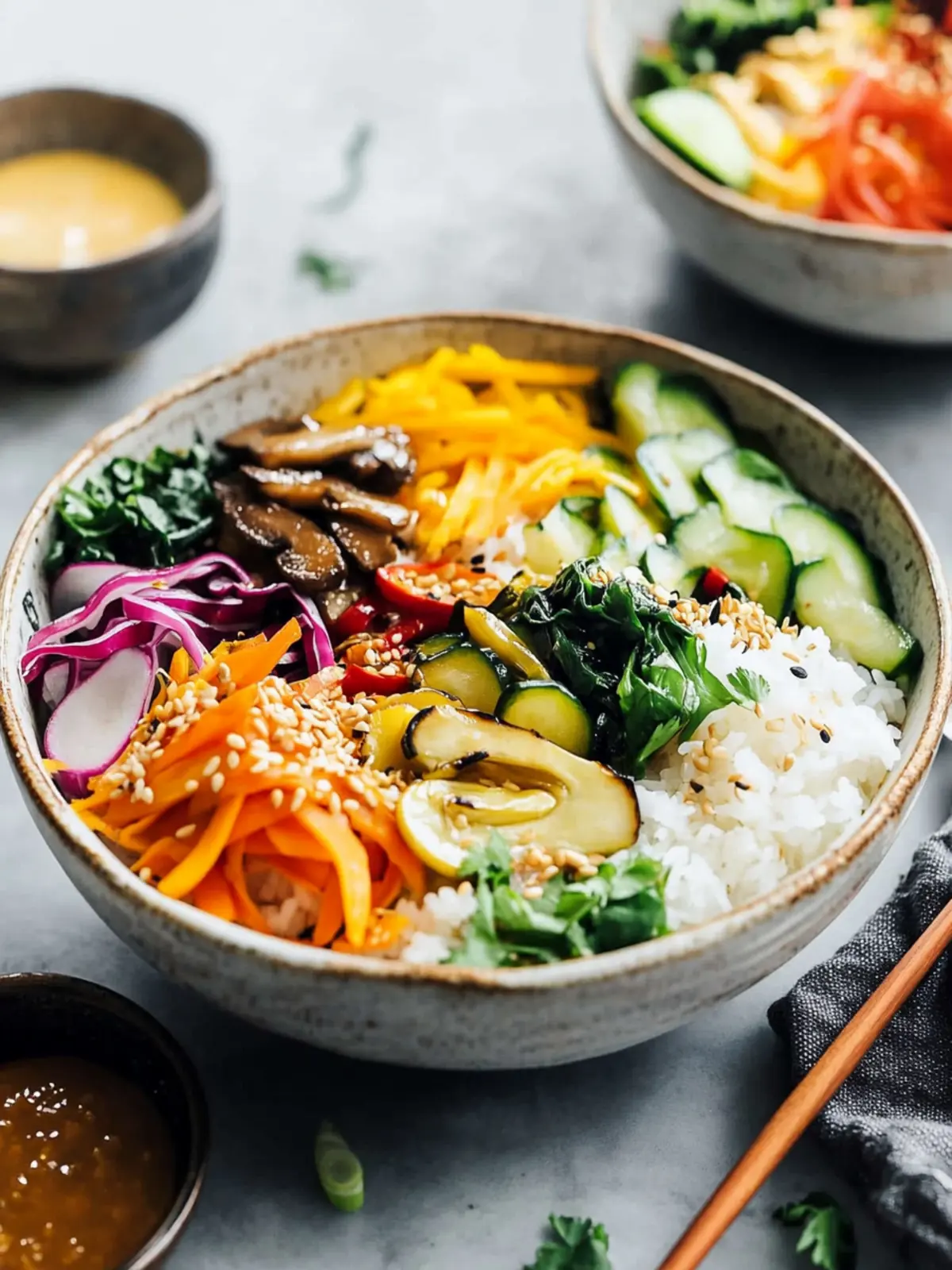
Assemble the Bowl: Grab a large bowl and layer in the cooked rice as the base. Top it with the roasted kale, sautéed mushrooms, sliced carrots, red bell peppers, and red cabbage. Drizzle generously with your spicy miso sauce and garnish with fresh cilantro and sesame seeds for that extra touch.
Optional: Add some sliced avocado for creaminess!
Exact quantities are listed in the recipe card below.
Make Ahead Options
These Healthy Vegan Bibimbap bowls are perfect for meal prep enthusiasts looking to save time during the week! You can prepare the rice, sautéed vegetables, and miso sauce up to 3 days in advance; just refrigerate each component separately. To maintain the quality, keep the roasted kale fresh by adding it right before serving to prevent sogginess. When you’re ready to enjoy, simply reheat the rice and sautéed vegetables, assemble everything in a bowl, and drizzle with the flavorful miso sauce. This way, you’ll have a delicious, hassle-free meal that’s just as vibrant and tasty as if you made it fresh!
How to Store and Freeze Healthy Vegan Bibimbap
- Fridge: Store leftover Healthy Vegan Bibimbap components separately in airtight containers for up to 4 days. This helps maintain freshness and texture.
- Freezer: For longer storage, freeze the prepared rice and miso sauce separately for up to 3 months. Avoid freezing raw vegetables to prevent texture loss.
- Reheating: To reheat, microwave the rice uncovered for about 1-2 minutes or until hot. Warm the miso sauce on the stove until heated through, stirring occasionally.
- Make-Ahead Tip: Pre-cook and store the rice and roasted kale in the fridge for quick assembly on busy nights!
Healthy Vegan Bibimbap Variations
Embrace your creativity and make this dish uniquely yours with these fun twists and swaps!
-
Protein Boost: Add pan-fried tofu or tempeh for an extra punch of plant-based protein. It’ll make your Bibimbap even heartier and more satisfying.
-
Classic Toppings: Incorporate Kimchi or Gochujang for an authentic Korean touch. These additions bring vibrant flavors and a bit of spice that perfectly complement the other ingredients!
-
Crunchy Veggies Swap: Try adding zucchini or cucumber for a refreshing crunch. The added texture will enhance your Bibimbap experience!
-
Nutty Flavor: Swap sesame seeds for sunflower seeds to introduce a new nutty element. They’ll bring a delightful crunch and different flavor profile to your bowl.
-
Savory Miso Alternatives: Use tahini or peanut butter in place of miso for a completely different flavor twist. Each will impart its own creamy goodness to the sauce!
-
Herb Variations: Experiment with parsley instead of cilantro for a milder herbal finish. This subtle swap can change the dish’s flavor while keeping it fresh.
-
Vibrant Color: Substitute red cabbage with green cabbage or even bok choy for a lovely presentation and slight flavor difference, giving a good crunch and freshness.
-
Heat Levels: Adjust the amount of cayenne according to your spice preference. Feel free to omit it for those who enjoy a milder taste!
Customizing your Healthy Vegan Bibimbap can be an adventure; make it as unique as you are!
What to Serve with Healthy Vegan Bibimbap?
Creating the perfect meal is all about balance and flavor harmony, and that’s exactly what you’ll find alongside this vibrant dish.
-
Creamy Avocado: Adds a rich, buttery texture that complements the crunchy veggies and spicy miso sauce beautifully. It’s not just delicious; the creaminess brings a luxurious touch.
-
Spicy Kimchi: Traditional and flavorful, this fermented side brings heat and gut-friendly probiotics, making it an ideal match for the colorful Bibimbap.
-
Sweet Potato Fries: Crispy on the outside and steamy within, they offer a delicious sweetness that contrasts perfectly with the savory elements of the Bibimbap.
-
Cucumber Salad: A refreshing, crunchy addition that lightens the meal, adding crispness and a vinegary zing that contrasts well with the spiciness of the miso sauce.
-
Toasted Sesame Seeds: Sprinkle these earthy seeds on top for an added crunch and nutty flavor that ties the whole dish together while enhancing its visual appeal.
-
Cold Green Tea: A soothing beverage choice that complements the dish’s flavor profile while offering a refreshing balance to the heat and spices.
Your table is about to shine with these delightful pairings, elevating your Healthy Vegan Bibimbap to an extraordinary dining experience!
Expert Tips for Healthy Vegan Bibimbap
-
Kale Massage: Ensure you massage the kale well with salt and pepper; this breaks down its fibers to achieve perfect crispiness when roasted.
-
Rice Precision: Use pre-cooked brown rice to save time, ensuring fluffy, tender grains without overcooking.
-
Adjust Sauce Flavor: Experiment with the amount of cayenne in your miso sauce; start with less if you’re unsure about the heat level.
-
Fresh Ingredients: Always opt for fresh, high-quality miso paste for an authentic flavor in your Healthy Vegan Bibimbap.
-
Layering Order: When assembling, layer the ingredients creatively to prevent sogginess and maintain texture; it’s visually stunning and delicious!
Healthy Vegan Bibimbap Recipe FAQs
What is the best way to select ripe vegetables for the Bibimbap?
Absolutely! When choosing vegetables, look for vibrant colors and firmness. For kale, avoid any yellow leaves or dark spots; fresh kale should feel crisp and have a deep green color. The mushrooms should be firm, with no signs of sliminess, and the bell peppers should be bright and shiny. This ensures you get the best nutrients and flavor for your Healthy Vegan Bibimbap.
How should I store leftover Healthy Vegan Bibimbap?
Very simply! Store the components of your Healthy Vegan Bibimbap in separate airtight containers in the refrigerator. This method preserves the freshness and texture of each ingredient for up to 4 days. Be sure to keep the rice and miso sauce in one container and the veggies in another to avoid sogginess.
Can I freeze Healthy Vegan Bibimbap?
Absolutely! You can freeze the cooked rice and the spicy miso sauce separately for up to 3 months. To do this, let the cooked rice cool completely, then transfer it to freezer bags and remove as much air as possible. For the miso sauce, allow it to cool, then pour it into a freezer-safe container. Just remember not to freeze the raw vegetables, as they can lose their texture.
What if my kale isn’t crispy after roasting? How can I troubleshoot that?
Great question! If your kale isn’t crispy, it might be due to overcrowding on the baking sheet or not massaging it well enough before roasting. For best results, ensure the leaves are spread in a single layer and massage them with olive oil, salt, and pepper properly. If they are still limp, try roasting them a little longer, checking every couple of minutes to prevent burning.
Are there any dietary considerations for the Healthy Vegan Bibimbap?
Definitely! This Healthy Vegan Bibimbap is naturally vegan and gluten-free if you opt for tamari instead of soy sauce. However, if you’re preparing it for others, inquire about any allergies they might have, especially to sesame seeds, miso paste (which contains fermented soy), or garlic. If you have pets, be cautious about leftover ingredients, especially those containing garlic and onions, as these can be harmful to them.
How can I ensure the miso sauce is the right consistency?
To get the perfect consistency for your miso sauce, start by adding the miso paste to the water in a saucepan over low heat, stirring continuously to prevent lumps. If it’s too thick, gradually add more water (or vegetable broth) until you achieve a smooth, pourable consistency. After simmering for 3-5 minutes and mixing in other ingredients like lime juice and ginger, it should be creamy and flavorful, perfect for drizzling over your Bibimbap!
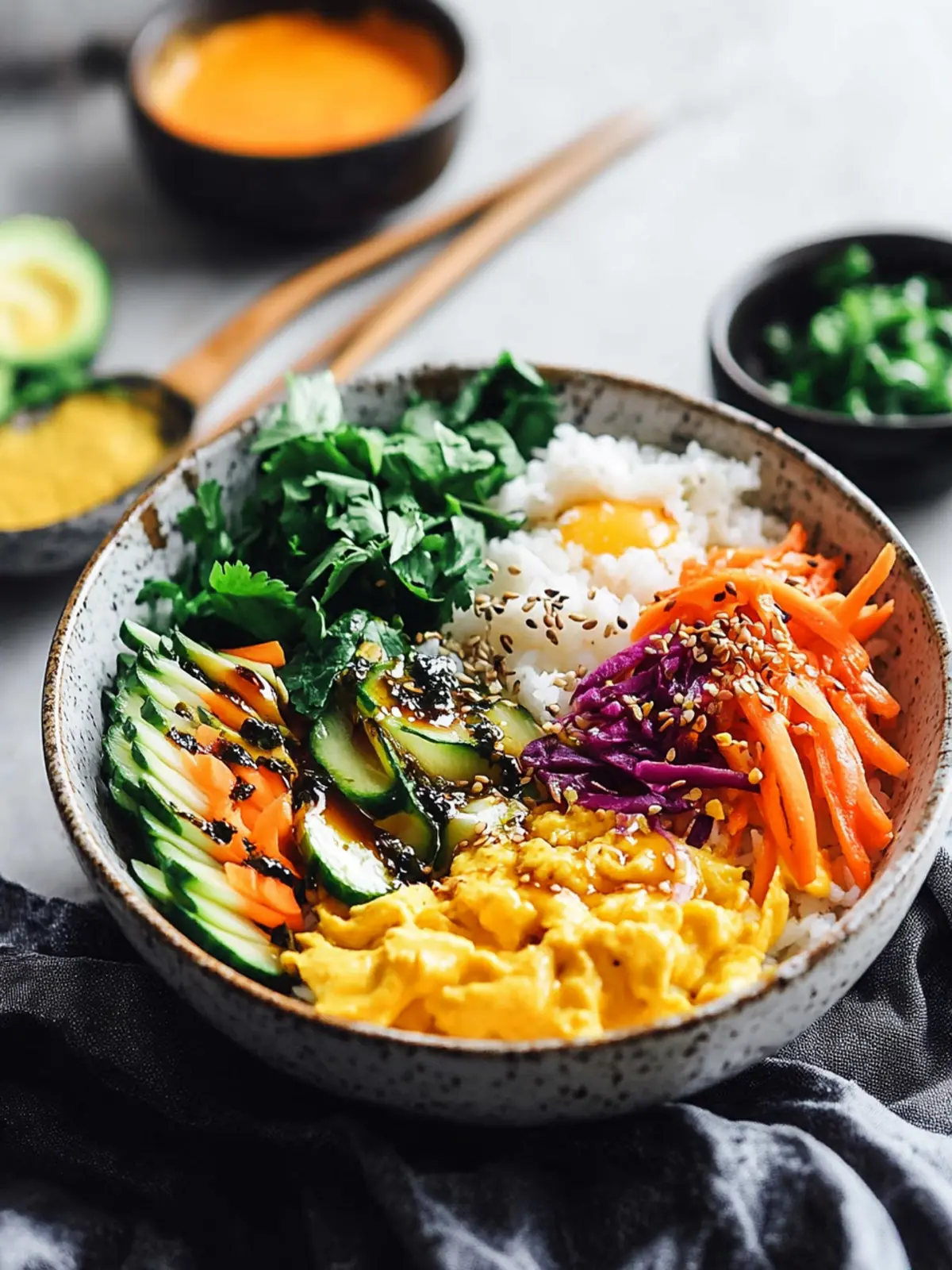
Delicious Healthy Vegan Bibimbap for Quick Weeknight Dinners
Ingredients
Equipment
Method
- Cook the brown rice according to package instructions and set aside.
- Preheat your oven to 400°F (200°C). Massage the kale with a pinch of salt and pepper, then roast for about 10-15 minutes.
- Sauté sliced white mushrooms in a medium pan over medium heat for 6-8 minutes. Add soy sauce in the last minute.
- In a small saucepan, combine miso paste and water. Simmer for 3-5 minutes and add ginger and cayenne.
- Assemble the bowl with rice, topped with roasted kale, sautéed mushrooms, sliced carrots, red bell peppers, and red cabbage. Drizzle with miso sauce and garnish.