

There’s nothing quite like the tantalizing aroma of sizzling garlic mingling with the savory scent of ground beef cooking on the stove. As I took my first bite of these Delicious Korean Beef Bowls, I was transported to my favorite takeout spot—only this time, I savored the satisfaction of having created it in my own kitchen. In about the same time it takes to order takeout, you can whip up this quick and easy meal that’s perfect for the whole family. The vibrant mix of sweet and savory flavors, paired with colorful toppings that add a delightful crunch, ensures this dish becomes a staple in your home cooking repertoire. With versatile substitutions available, finding the right balance for your personal taste is a breeze. So, let’s dive into this comforting, budget-friendly meal that’s sure to impress!

Why are Delicious Korean Beef Bowls a Must-Try?
Quick preparation: You can enjoy these bowls in under 30 minutes, making them the perfect weeknight dinner.
Incredible flavor: The balance of sweet, savory, and a hint of spice will leave your taste buds dancing.
Customizable toppings: Feel free to add your favorite vegetables or adjust spices to suit your family’s preferences.
One-pot convenience: Less mess means more time to enjoy dinner with loved ones.
Budget-friendly: Utilizing simple ingredients ensures this recipe won’t break the bank.
Family-approved: A satisfying meal that even picky eaters will devour!
Delicious Korean Beef Bowls Ingredients
For the Rice
• Brown Rice – Base of the bowl providing fiber and texture; use Lundberg Family Farms for a nuttier flavor.
• Chicken Broth – Adds depth and moisture to the rice; vegetable broth can be substituted for a vegetarian option.
• Sea Salt – Enhances the flavor of the rice.
For the Beef
• Olive Oil – Used to cook the beef, adding richness; can be substituted with sesame oil for a more authentic flavor.
• Ground Beef (Extra Lean) – Main protein source ensuring a less greasy dish; substitute with ground turkey or chicken for a lighter option.
• Garlic Cloves – Provides aromatic flavor; fresh is best, but powdered garlic can be used in a pinch.
• Coconut Sugar – Sweetness component balancing the sauce; brown sugar can be an alternative.
• Soy Sauce – Adds salty umami flavor; Kikkoman is recommended for balance. Tamari can be used for a gluten-free option.
• Fresh Ginger – Adds warmth and spice; grated is best for incorporation; use less dried ginger as a substitute.
• Orange Juice & Zest – Citrus flavors brighten the dish; lemon juice/zest can be a substitute for a different zest.
• Sesame Oil – Enhances the Asian flavor profile; this can be increased for a more robust taste.
• Red Pepper Flakes – Adds a touch of heat; adjust according to your preference.
For the Toppings
• Carrots – Pickled for tang and crunch; any root vegetable can be pickled as a substitute.
• Rice Vinegar & Honey – Used in pickling carrots; provides tang and sweetness; substitute with apple cider vinegar and maple syrup.
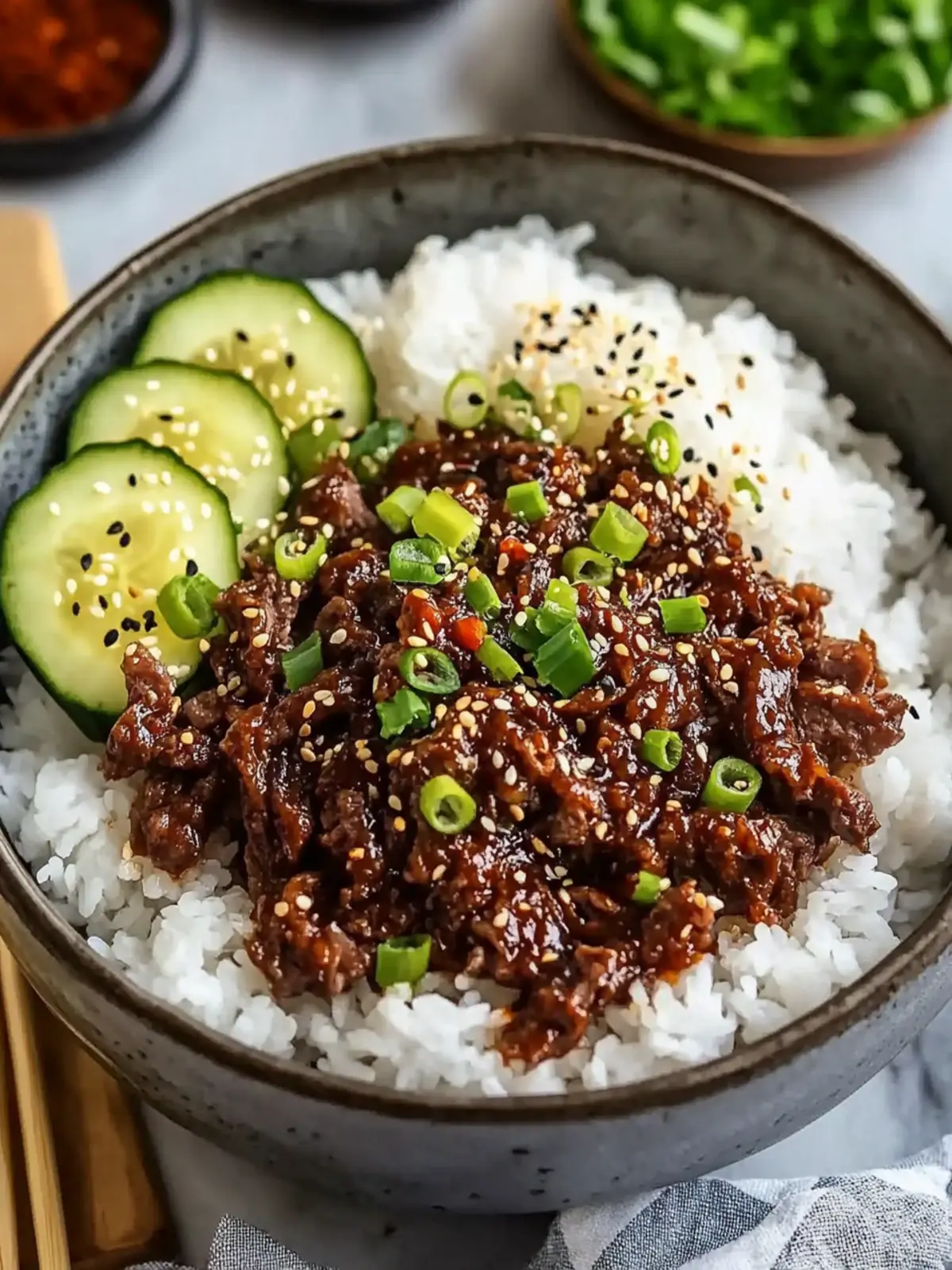
• Cucumber – Offers freshness and crunch on top; substitute with radishes for a spicy kick.
• Boiled Eggs – Adds creaminess and additional protein; can be left out for a lighter dish or replace with tofu for a vegetarian option.
• Green Onions – Adds freshness and garnishing appeal; chives can work as a substitute.
Your journey to creating delicious Korean Beef Bowls is just a few ingredients away, and these easy substitutions ensure you can customize this meal to your liking!
How to Make Delicious Korean Beef Bowls
-
Prepare Eggs: Bring a pot of water to a gentle boil. Carefully add the eggs and cook for 6 minutes. Once done, transfer the eggs to an ice bath to halt the cooking process and ensure a creamy yolk.
-
Cook Rice: In a medium saucepan, combine brown rice, chicken broth, and a pinch of sea salt. Bring to a simmer, then cover and cook for about 25 minutes until all the liquid is absorbed and the rice is tender.
-
Prep Ingredients: While the rice is cooking, julienne the carrots, slice the cucumber, mince the garlic, and chop the green onions. This colorful preparation elevates the dish and keeps you organized!
-
Make Sauces: In a mixing bowl, whisk together the coconut sugar, soy sauce, grated ginger, orange juice and zest, sesame oil, and red pepper flakes until well combined. In a separate bowl, mix the rice vinegar and honey for pickling the carrots.
-
Cook Beef: Heat a skillet over medium-high heat, add olive oil, and let it warm up. Add the ground beef, cooking until it’s browned and crumbly. Drain any excess fat, stir in the minced garlic, and pour in the prepared sauce, cooking until it’s glossy and aromatic.
-
Pickle Carrots: Toss your julienned carrots in the rice vinegar mixture and let them sit for 2-3 minutes. This quick pickling process infuses them with flavor, adding that tangy crunch!
-
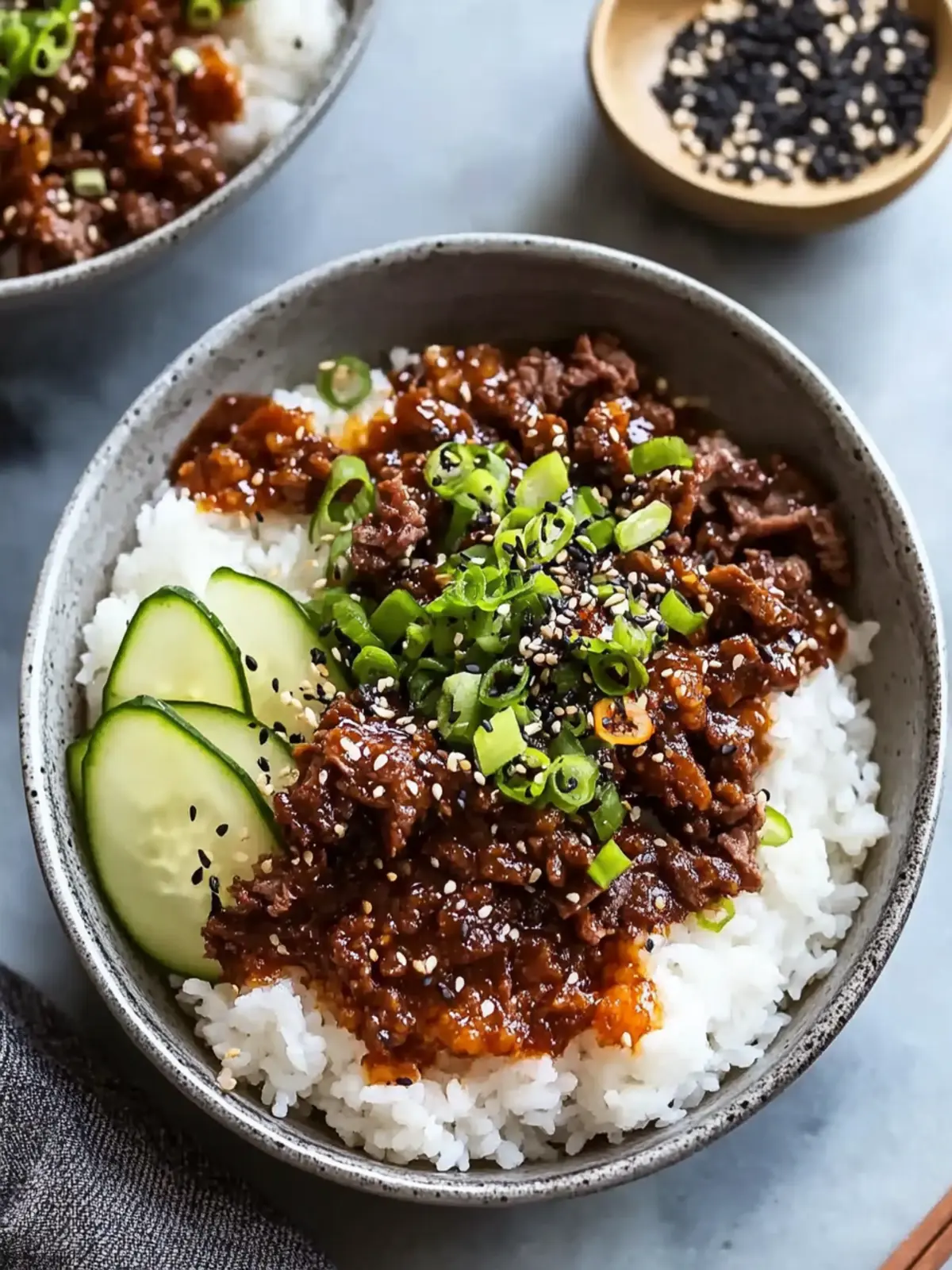
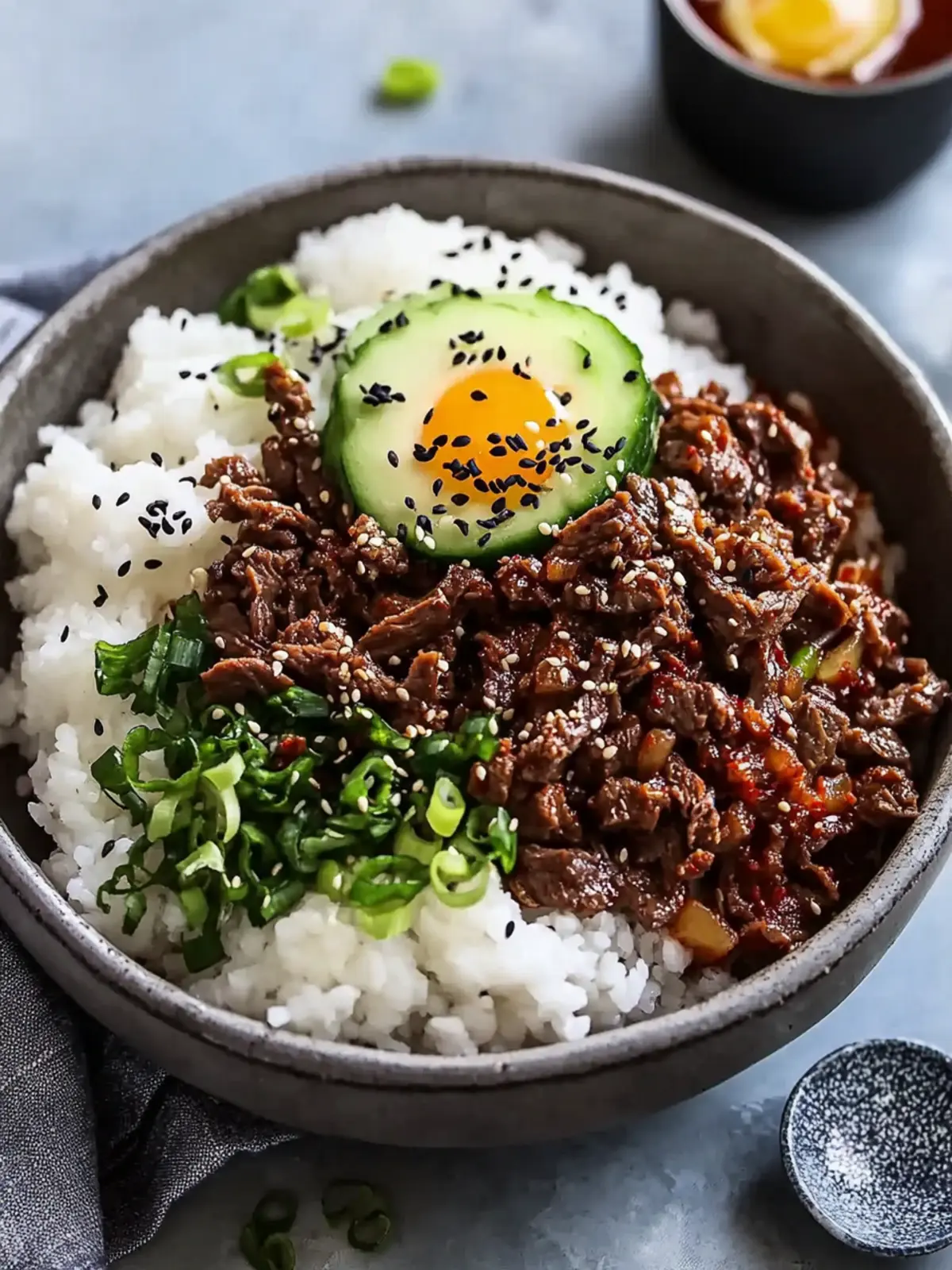
Assemble Bowls: Start with a generous scoop of rice in each bowl. Layer on the seasoned beef, followed by the pickled carrots, fresh cucumber slices, and a sprinkling of sliced green onions. Finally, cut the boiled eggs in half and place them on top for that finishing touch.
Optional: Garnish with sesame seeds for extra flavor.
Exact quantities are listed in the recipe card below.
Expert Tips for Delicious Korean Beef Bowls
Perfect Beef: Ensure you cook the ground beef until just no longer pink to prevent dryness; overcooking can lead to a tough texture.
Garlic Timing: Add minced garlic just before the beef is fully cooked to avoid bitterness, infusing lovely aromatic flavors into the dish.
Cucumber Swap: If you desire a spicier crunch, substitute cucumber with radishes; the heat complements the sweet and savory notes beautifully.
Pickled Carrots: Don’t skip the pickling step; it elevates the dish with tangy crunch. Marinate carrots for longer if you want a more pronounced flavor.
Rice Precision: Rinse brown rice before cooking to remove excess starch; this enhances texture and prevents clumping in your Delicious Korean Beef Bowls.
Meal Prep: Prepare extra beef and rice to store in the fridge for quick lunches throughout the week, ensuring homemade goodness is always on hand.
What to Serve with Delicious Korean Beef Bowls?
Elevate your dining experience by pairing these vibrant bowls with flavorful sides and delightful drinks that enhance the meal’s Asian flair.
-
Cucumber Salad:
Light and refreshing, this salad sprinkled with sesame seeds complements the richness of the beef while adding a crispy texture. -
Steamed Edamame:
These tender soybeans provide a delightful pop of flavor and help balance the dish’s sweetness, making it a great appetizer or side. -
Kimchi:
Fermented for tanginess, kimchi adds an exciting kick, enhancing the umami profile of the bowls and introducing a vibrant color contrast. -
Sesame Roasted Broccoli:
Crispy, nutty broccoli drizzled with sesame oil offers a satisfying crunch while echoing the flavors in the Korean beef dish. -
Miso Soup:
This warm, savory soup can start the meal on a comforting note, helping to round out the experience with a warm broth filled with umami goodness. -
Green Tea:
A soothing cup of green tea not only cleanses the palate but also nicely balances the dish’s sweet and savory elements, making it an excellent beverage choice. -
Chocolate Mochi:
For dessert, this chewy delight brings a touch of sweetness and is the perfect ending to your meal, complementing the flavors of the Korean beef bowls wonderfully.
Delicious Korean Beef Bowls Variations
Customize your meal to match your mood or dietary needs with these exciting twists!
- Dairy-Free: Omit the boiled eggs for a lighter dish or replace with silken tofu for added creaminess.
- Vegetarian: Swap ground beef for crumbled tempeh or a mixture of your favorite beans to keep it hearty and filling.
- Gluten-Free: Use tamari instead of soy sauce, and ensure all other sauces are gluten-free for a safe and tasty meal.
- Spicy Kick: Add sliced jalapeños or crushed chili peppers to the beef mixture for a fiery twist that will tantalize your taste buds.
- Sweet & Tangy: Mix in a splash of pineapple juice to the sauce for a delightful sweet and sour flavor that pairs beautifully with the beef.
- Texture Boost: Stir in some chopped nuts like peanuts or cashews just before serving to add crunch and depth to your bowls.
- Herb Infusion: Add a handful of fresh cilantro or basil on top for an herbal brightness that complements the savory flavors.
- Zesty Upgrade: Substitute orange juice with lime juice for a tangy, refreshing twist that enhances the overall flavor profile.
How to Store and Freeze Delicious Korean Beef Bowls
Fridge: Store leftovers in an airtight container for up to 4 days, ensuring the beef, rice, and pickled carrots are separated for optimal freshness.
Freezer: The beef can be frozen for up to 3 months. Cool completely before transferring to a freezer-safe bag. When ready to enjoy, thaw overnight in the fridge.
Reheating: Reheat rice and beef separately in the microwave or on the stove until heated through. Add a splash of broth to rice if needed for moisture.
Storage Tip: Avoid sogginess by keeping the pickled carrots separate until ready to serve. Enjoy your Delicious Korean Beef Bowls at their best!
Make Ahead Options
These Delicious Korean Beef Bowls are a fantastic choice for those looking to save time during busy weeknights! You can prepare the pickled carrots and rice up to 3 days in advance, storing them separately in the refrigerator. The ground beef can also be cooked ahead and refrigerated for up to 4 days. To maintain quality, ensure that the beef is cooled completely before fridge storage, and reheat gently to avoid dryness. When you’re ready to serve, simply reheat the beef in a skillet, warm the rice, assemble your bowls with the toppings, and enjoy a delicious meal that feels freshly made, all with minimal effort!
Delicious Korean Beef Bowls Recipe FAQs
What kind of brown rice should I use?
I recommend using Lundberg Family Farms brown rice for a nuttier flavor and better texture. If you prefer a quicker option, you can also opt for precooked brown rice, which only takes a few minutes to heat up!
How long can I store leftovers?
You can store any leftover Korean Beef Bowls in an airtight container in the refrigerator for up to 4 days. Be sure to keep the beef, rice, and pickled carrots separate to maintain their individual textures and flavors.
Can I freeze Korean Beef Bowls?
Absolutely! The beef can be frozen for up to 3 months. Allow it to cool completely before placing it in a freezer-safe bag to avoid freezer burn. When you’re ready to eat, simply thaw it overnight in the fridge and reheat as needed.
What if my ground beef turns out too greasy?
To prevent greasiness, make sure to use extra-lean ground beef and drain any excess fat after browning it in the skillet. If you find it still appears greasy, you can also blot it gently with paper towels before adding in the garlic and sauce.
Are there any dietary substitutions I can make?
Yes, you can easily adapt this recipe to suit various dietary needs. For a lighter option, swap out ground beef for ground turkey or chicken. To make this dish vegetarian or vegan, replace the beef with crumbled tofu or tempeh and use vegetable broth for the rice. Just remember to adjust your cooking times accordingly!
Can pets eat any of the ingredients?
While some ingredients like carrots or cucumber can be safe in moderation for pets, it’s best to keep onions, garlic, and soy sauce away from your furry friends as they can be harmful. Always consult your vet for the safest dietary options for your pets.
Delicious Korean Beef Bowls Ready in 30 Minutes or Less
Ingredients
Equipment
Method
- Prepare Eggs: Bring a pot of water to a gentle boil. Carefully add the eggs and cook for 6 minutes. Once done, transfer the eggs to an ice bath.
- Cook Rice: In a medium saucepan, combine brown rice, chicken broth, and a pinch of sea salt. Bring to a simmer, cover and cook for 25 minutes until liquid is absorbed.
- Prep Ingredients: While the rice is cooking, julienne the carrots, slice the cucumber, mince the garlic, and chop the green onions.
- Make Sauces: In a bowl, whisk together coconut sugar, soy sauce, grated ginger, orange juice and zest, sesame oil, and red pepper flakes. In another bowl, mix rice vinegar and honey.
- Cook Beef: Heat a skillet, add olive oil. Add ground beef, cooking until browned. Drain excess fat, stir in minced garlic, and pour in sauce.
- Pickle Carrots: Toss julienned carrots in the rice vinegar mixture and let sit for 2-3 minutes.
- Assemble Bowls: Start with rice in each bowl, layer on seasoned beef, pickled carrots, cucumber, and sliced green onions. Cut boiled eggs in half and place on top.