

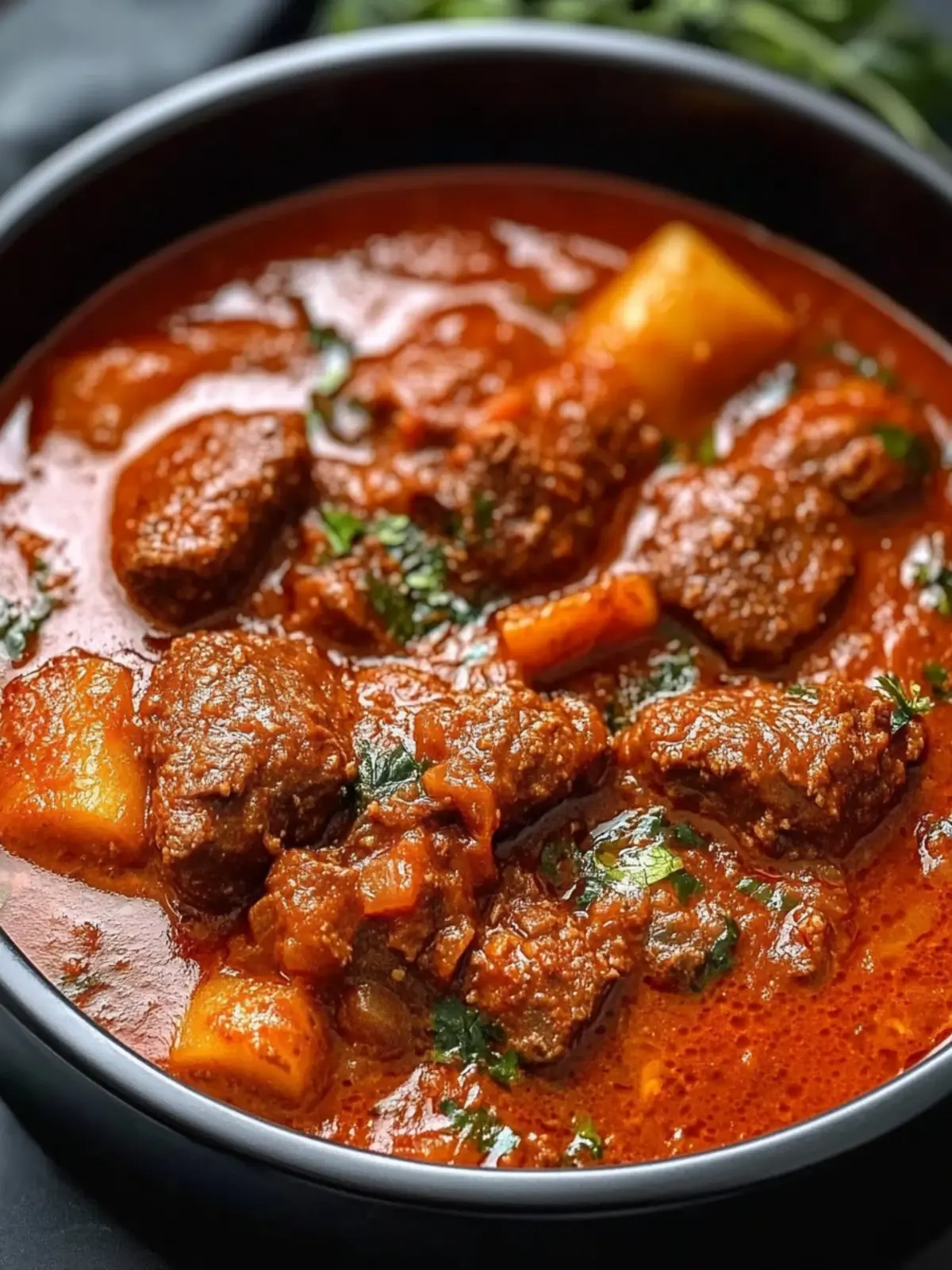
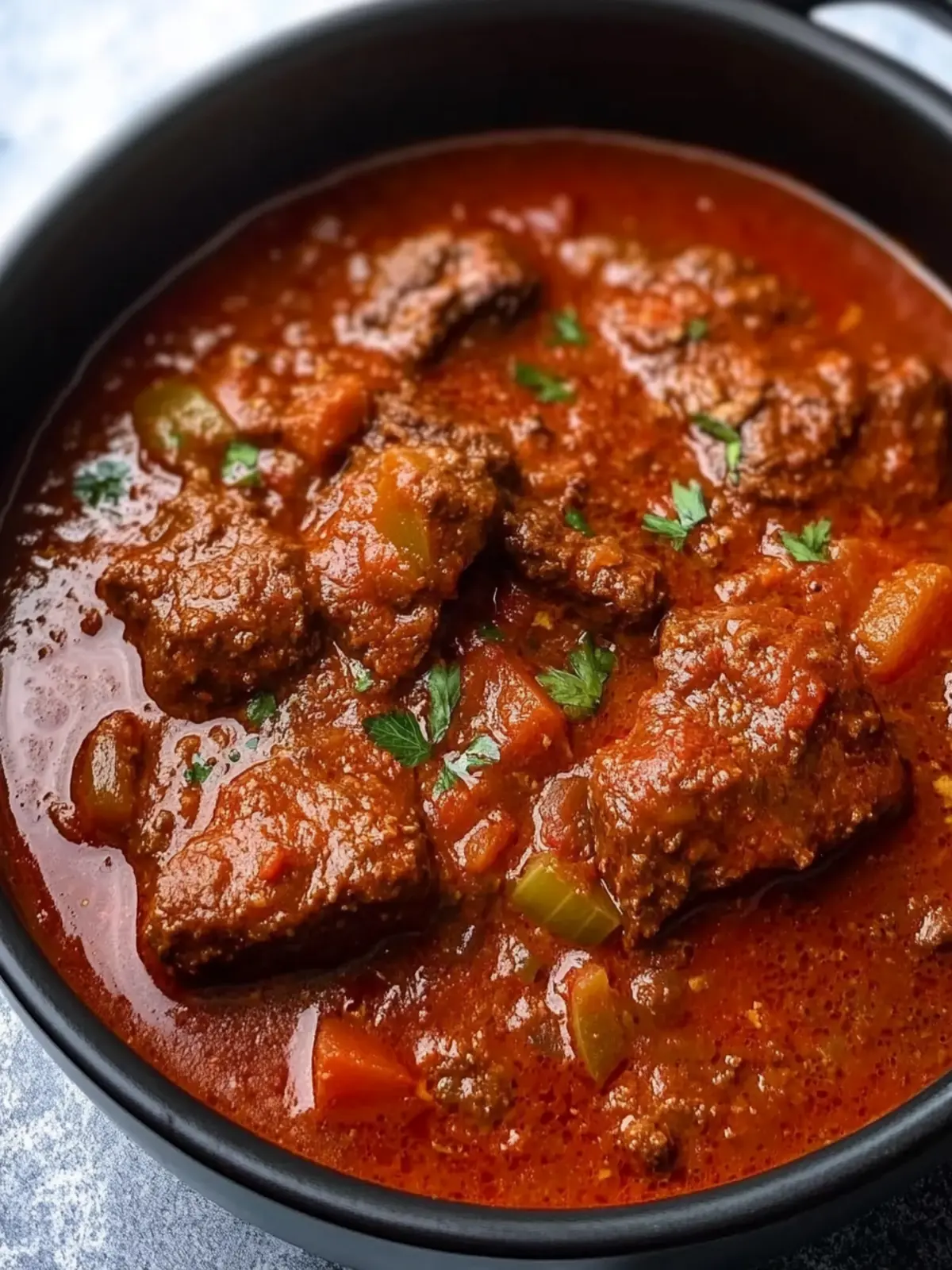
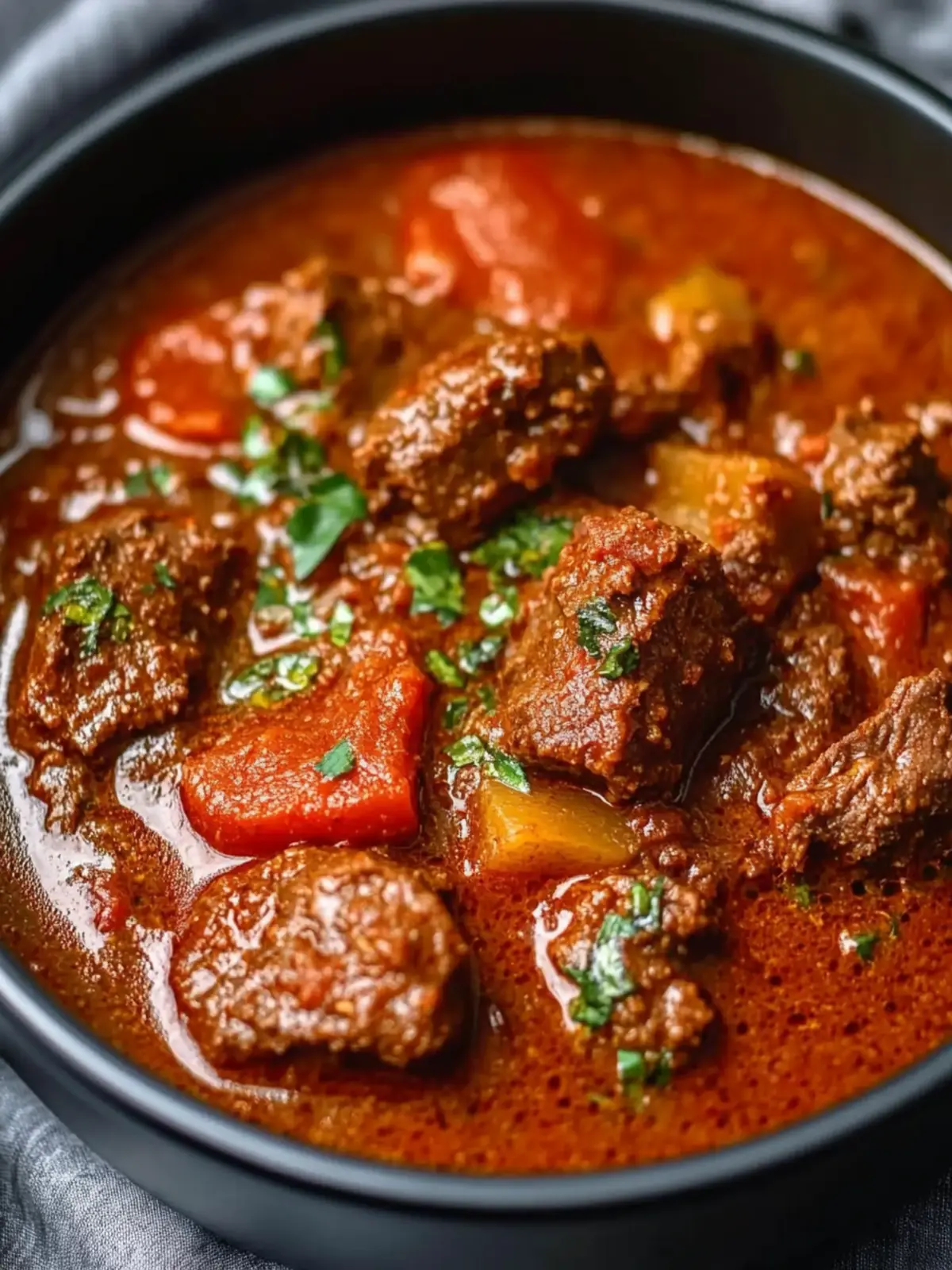
As the evening sun casts a golden hue in my kitchen, the aroma of my simmering Nigerian Beef Stew wafts through the air, transporting me to the heart of West Africa. It’s amazing how one dish can evoke memories of family gatherings and cherished recipes that have been passed down generations. This hearty stew, bursting with rich tomatoes and vibrant peppers, is more than just a meal; it’s a celebration of flavors that brings people together.
When you take your first bite, you’ll be enveloped in a savory embrace—from the tender beef infused with aromatic spices to the warmth of the scotch bonnet that dances on your palate. Perfectly paired with fluffy rice or crusty bread, this Nigerian Beef Stew is designed to satisfy both the hungry souls seeking comfort and those eager to explore the depths of traditional African cuisine. So, put on your apron and let’s create a dish that not only fills the belly but warms the heart!

Why is Nigerian Beef Stew a must-try?
Rich, Hearty Comfort: This dish wraps you in warmth, perfect for cozy nights in.
Bursting with Flavor: A vibrant blend of spices and ingredients creates a robust taste that lingers.
Cultural Heritage: Experience the essence of Nigeria with every bite, showcasing traditional cooking.
Easy to Customize: Feel free to swap ingredients and adjust spice levels to your liking.
Perfect for Sharing: Ideal for family gatherings or intimate dinners, this stew brings everyone together!
Nigerian Beef Stew Ingredients
For the Stew Base
• Red Bell Peppers – Add depth and sweetness to the stew; substitute with yellow or green bell peppers if unavailable.
• Canned Chopped Tomatoes (400 g) – Provides a rich tomato base; fresh tomatoes can be used if you prefer.
• Medium Onion – Enhances flavor through sautéing; shallots can be used for a milder taste.
• Scotch Bonnet (3) – Adds heat and spice; feel free to use jalapeños or adjust the quantity for less heat.
For the Seasoning
• Chicken Bouillon Powder (3 tsp) – Essential for flavor enhancement; adjust according to your taste preference.
• Salt (1 tsp) – Necessary for seasoning; modify as needed based on dietary restrictions.
• Oregano (1 tsp, optional) – Offers additional herbal notes; can be omitted or substituted with thyme.
For the Protein
• Beef (1 kg) – The star of the dish, providing richness; feel free to substitute with chicken, lamb, or goat.
For Cooking
• Vegetable Oil (1 cup) – Used for frying; replace with palm oil for an authentic flavor.
• Curry (½ tsp, optional) – Adds warmth and aromatic notes; you can omit this if preferred.
• Thyme (½ tsp, optional) – Provides earthiness; Italian seasoning can be a suitable substitute.
Enjoy preparing this delightful Nigerian Beef Stew as it envelops your kitchen with an inviting aroma!
How to Make Nigerian Beef Stew
-
Boil the Beef: In a pot, combine the beef with enough water, 2 tsp of bouillon powder, half tsp of salt, and the chopped onion. Boil for about 20 minutes until the beef is tender—adjust time based on the cut of meat.
-
Reserve the Stock: After boiling, remove the beef and set aside. Sieve the stock to eliminate any scum, ensuring a clear base for your stew.
-
Fry the Beef: Heat the vegetable oil in a medium saucepan until hot. Add the boiled beef and fry until golden brown. If you prefer a healthier option, you can grill the beef instead.
-
Prepare the Stew Base: Remove the fried beef and place it on paper towels to drain excess oil. In the same pot, add a pepper mix of pureed red bell peppers, canned tomatoes, onions, and scotch bonnet. Cook covered for about 10 minutes.
-
Add Spices: Stir in the optional spices, such as curry and thyme, along with the remaining bouillon or additional salt as needed. This enhances the stew’s rich flavor profile.
-
Combine and Simmer: Return the fried beef to the pot, ensuring it’s well-coated with the spicy mixture. Simmer for another 10-15 minutes until the oil rises to the surface.
-
Serve: Turn off the heat and dish out the stew warm. It pairs beautifully with your choice of rice, bread, or traditional sides.
Optional: Garnish with fresh parsley or chopped green onions for extra flavor and color.
Exact quantities are listed in the recipe card below.
Storage Tips for Nigerian Beef Stew
Fridge: Store your Nigerian Beef Stew in an airtight container for up to 7 days. Make sure it’s cooled completely before refrigerating to retain flavor.
Freezer: For longer storage, freeze the stew for up to 3 months. Portion it into freezer-safe containers, leaving space for expansion as it freezes.
Reheating: When you’re ready to enjoy the stew again, thaw overnight in the fridge and reheat in a pot over low heat, stirring occasionally, until warmed through.
Avoid Moisture: To prevent freezer burn, wrap containers tightly with plastic wrap or use vacuum-sealed bags for best results.
Nigerian Beef Stew Variations
Feel free to experiment and make this dish your own with these exciting twists!
-
Chicken Swap: Replace beef with chicken for a lighter, quicker cook while keeping the hearty flavor.
-
Vegetarian Delight: For a plant-based option, use mushrooms or lentils as a protein alternative. This variation still delivers satisfaction.
-
Fish Twist: Try adding fried fish instead of meat for a unique coastal flavor that enhances the stew’s richness.
-
Hearty Lentils: Incorporate lentils for a protein boost; they absorb the delicious spices beautifully, adding a great texture.
-
Reduce the Heat: Adjust scotch bonnets to fit your taste—using just one or two can still deliver flavor without overwhelming spice.
-
Herb Booster: Experiment by adding fresh herbs like basil or cilantro at the end; they brighten the stew, giving it a fresh twist.
-
Coconut Creaminess: Stir in a splash of coconut milk for a creamy and rich texture, adding tropical layers to the flavor profile.
-
Smoky Flavor: Introduce smoked paprika or chipotle for a smoky depth that enriches the entire dish. The warmth brings a rustic feel.
Make Ahead Options
These Nigerian Beef Stew options are perfect for busy cooks looking to save time during the week! You can prepare the beef by boiling it up to 24 hours in advance, ensuring it’s ready for frying when you need it. Additionally, the pepper mix can be made ahead and stored in the refrigerator for up to 3 days; just make sure to cool it completely before refrigerating to maintain its flavor and texture. When you’re ready to serve, simply fry the prepped beef and combine it with the stewed mixture, letting it simmer for a few minutes for that delicious finish. This way, you’ll enjoy a hearty and satisfying meal with minimal effort!
What to Serve with Nigerian Beef Stew?
Enhance your mealtime experience with delightful accompaniments that complement the rich flavors of this African classic.
-
Fluffy White Rice: This is the traditional pairing, absorbing the savory stew and providing a comforting balance.
-
Jollof Rice: Celebrate with this iconic West African dish, its spiced tomatoes mirroring the beef stew’s vibrant essence. Tables will come alive with colors and aromas!
-
Fried Plantains: Sweet and caramelized, these golden bites add a fabulous contrast to the heat of the stew, providing a delightful sweetness that pairs beautifully.
-
Pounded Yam: Creamy and smooth, it’s perfect for dipping into the stew, creating a satisfying textural combination that enriches each bite.
-
Nigerian Ewedu Soup: A traditional side often enjoyed with stews, its viscous nature complements the rich beef stew wonderfully, enhancing the overall meal.
-
Crusty Bread: Serve with warm bread to soak up every bit of the flavorful sauce. It’s a classic comfort food move that never disappoints!
-
Cold Zobo Drink: Refresh your palate with this hibiscus drink, its tartness balancing the savory stew beautifully. It’s vibrant and adds a festive touch to any meal!
-
Chocolate Cake: Conclude your meal on a sweet note—this rich dessert provides a wonderful contrast to the spicy stew, leaving everyone satisfied and happy!
Expert Tips for Nigerian Beef Stew
• Balance the Water: Avoid adding too much water at once to prevent diluting the rich flavor of your Nigerian Beef Stew.
• Oil on Top: Let the oil rise to the surface as an indicator that your stew is ready—this adds a luscious finish.
• Tender Beef: For tougher cuts, you may need to boil the beef longer to achieve that tender texture that melts in your mouth.
• Adjusting Heat: If scotch bonnets are too spicy for your palate, consider using fewer peppers or jalapeños for a milder kick.
• Storage Wisdom: Remember to cool your stew before storing it in the fridge or freezer to maintain optimal flavor and texture.
Nigerian Beef Stew Recipe FAQs
What type of beef should I use for Nigerian Beef Stew?
Absolutely! For Nigerian Beef Stew, I recommend using cuts like chuck or brisket as they become wonderfully tender with cooking. If you prefer leaner meat, sirloin works well too. Alternatively, you could use chicken, lamb, or even goat for a delightful twist on the classic recipe.
How can I tell if my tomatoes are ripe enough for the stew?
Very good question! Look for tomatoes that are deep red and feel slightly soft when gently pressed. Avoid those with dark spots or a wrinkled skin, as they may be overripe. If fresh tomatoes aren’t available, canned chopped tomatoes are a fantastic option for a rich base.
What’s the best way to store leftover Nigerian Beef Stew?
For sure! Store your Nigerian Beef Stew in an airtight container in the fridge for up to 7 days. Before refrigerating, ensure it cools completely to help preserve its rich flavor. When reheating, warm it gently on the stovetop over low heat, stirring occasionally, to prevent sticking.
Can I freeze Nigerian Beef Stew? How?
Yes, you can! To freeze, let the stew cool completely, then portion it into freezer-safe containers, leaving a little space at the top for expansion. It can be frozen for up to 3 months. When ready to enjoy, thaw in the fridge overnight, then reheat in a pot on low until warmed through, stirring occasionally for even heating.
Are there any dietary considerations with this stew?
Certainly! If you’re cooking for someone with allergies, be mindful of peppers, as scotch bonnets can be quite spicy. Adjust the heat level by using fewer peppers or replacing them with milder options like jalapeños. Additionally, for gluten-free, ensure that any stock or bouillon used is certified gluten-free.
What should I do if my stew is too watery?
Great question! If your stew is too watery, simmer it uncovered for a bit longer to reduce the liquid. Alternatively, you can add a thickening agent: a mix of cornstarch and water can help thicken the stew quickly, but be sure to add it gradually and stir well. Enjoy your cooking!
Nigerian Beef Stew: Savory Delight for Your Cozy Nights
Ingredients
Equipment
Method
- In a pot, combine the beef with enough water, 2 tsp of bouillon powder, half tsp of salt, and the chopped onion. Boil for about 20 minutes until the beef is tender.
- After boiling, remove the beef and set aside. Sieve the stock to eliminate any scum.
- Heat the vegetable oil in a medium saucepan until hot. Add the boiled beef and fry until golden brown.
- In the same pot, add a pepper mix of pureed red bell peppers, canned tomatoes, onions, and scotch bonnet. Cook covered for about 10 minutes.
- Stir in the optional spices, such as curry and thyme, along with the remaining bouillon or additional salt as needed.
- Return the fried beef to the pot, ensuring it’s well-coated with the spicy mixture. Simmer for another 10-15 minutes.
- Turn off the heat and dish out the stew warm.