

There’s something comforting about the filling aroma of spices wafting through my kitchen, especially when I’m whipping up a dish as delightful as Middle Eastern Style Stuffed Onions. This recipe is a cherished gem I stumbled upon during a lazy Sunday afternoon, yearning for a meal that would bring a burst of flavor without much fuss. Imagine tender, sweet onions enveloping a savory mix of rice, herbs, and spices—each bite a harmonious blend of warmth and nostalgia.
What I love about this dish is its versatility. You can enjoy a comforting vegetarian version or spice it up by adding ground beef for a hearty feast. Plus, the ease of using a microwave makes this recipe not only a time-saver but an approachable way to impress your family or guests. So, let’s dive in and create something that’s not just a meal, but a delicious experience that transports you straight to the bustling markets of the Middle East!

Why are Middle Eastern Stuffed Onions a must-try?
Comforting warmth: These stuffed onions envelop a savory filling, creating a dish that feels like a warm hug after a long day.
Versatile delight: Enjoy the vegetarian option or easily customize with ground beef for heartier meals.
Simple prep: The microwave makes this recipe quick and easy, fitting perfectly into any busy schedule.
Flavor explosion: The aromatic herbs and spices harmonize beautifully, making each bite a flavor-packed journey, reminiscent of traditional Middle Eastern markets.
Impressive presentation: Stuffed onions look beautiful on your table, sure to wow family and friends at any gathering!
Perfect pairing: Serve with Greek yogurt or a fresh salad for a delightful balance that enhances the meal experience.
Middle Eastern Stuffed Onions Ingredients
For the Filling
- Yellow Onions – The stars of the dish; choose large, firm onions for easy stuffing.
- Roma Tomatoes – Add moisture and freshness; substitute with any medium tomato if needed.
- Parsley – This herb enhances the dish’s vibrancy; feel free to use curly or flat-leaf varieties.
- Dill – A fragrant touch to the filling; can be swapped for thyme for a twist.
- Garlic Cloves – Essential for flavor; fresh is best, but powder can work in a pinch.
- Cal-Rose or Sushi Rice – Provides structure; avoid long-grain varieties for better results.
- Extra Virgin Olive Oil – Offers richness; any high-quality cooking oil will do, but olive oil is ideal.
- Pomegranate Molasses – Adds a sweet-tangy contrast; balsamic vinegar can be a substitute.
- Lemon Juice – Brightens the dish; vinegar can be used for a similar tartness.
- 7 Spices – A traditional flavor booster; adjust or omit based on what you have on hand.
- Dried Mint – Infuses freshness; fresh mint works too—just tweak the amount.
- Coriander Powder, Garlic Powder, Onion Powder, Aleppo Pepper, Black Pepper – A mix that deepens flavor; adjust according to your spice preference.
- Salt – Essential to bring out flavors; adjust to your taste.
For Cooking and Sauce
- Hot Water – To soften the onions in the microwave; ensures they are easy to stuff.
- Tomato Sauce – Creates a delicious cooking base; use your favorite canned or homemade variety.
- Vegetable Stock Powder – Adds depth and umami to the sauce; homemade vegetable broth is a great alternative.
Dive into this recipe for Middle Eastern Stuffed Onions, where each ingredient brings you one step closer to a delightful homemade experience.
How to Make Middle Eastern Stuffed Onions
-
Prepare the Onions: Start by trimming both ends of your yellow onions and peeling off their outer layers. Carefully cut a wedge into each onion, ensuring you don’t split them. This will create the perfect pocket for stuffing.
-
Microwave the Onions: Place the prepared onions in a microwave-safe dish with hot water and microwave them for about 7-8 minutes, or until they soften. Allow them to cool slightly before handling.
-
Soak the Rice: Rinse your Cal-Rose or sushi rice under cold water, then soak it for 15 minutes. After soaking, drain the rice and preheat your oven to 375°F.
-
Mix the Filling: In a large bowl, combine the soaked rice, chopped parsley, dill, minced garlic, diced tomatoes, and your chosen spices. Add pomegranate molasses and olive oil, mixing thoroughly to blend the flavors.
-
Stuff the Onions: Gently separate the onion layers and fill each layer with about 2 tablespoons of the rice mixture. Arrange the stuffed onions carefully in a baking dish, standing upright to keep their shape.
-
Prepare the Sauce: In a separate bowl, combine tomato sauce, water, pomegranate molasses, tomato paste, dried mint, and vegetable stock. Pour this sauce generously over the stuffed onions, ensuring they are well-covered.
-
Bake the Dish: Cover the baking dish with parchment paper and then foil, sealing well. Bake in the preheated oven for 1 hour and 15 minutes, or until the onions are beautifully soft and tender.
-
Serve and Enjoy: Once done, let the onions cool for a few minutes. Serve them warm, perhaps alongside a refreshing salad or dollops of yogurt for a delightful balance.
Optional: Garnish with extra parsley or a sprinkle of pomegranate seeds for a pop of color!
Exact quantities are listed in the recipe card below.
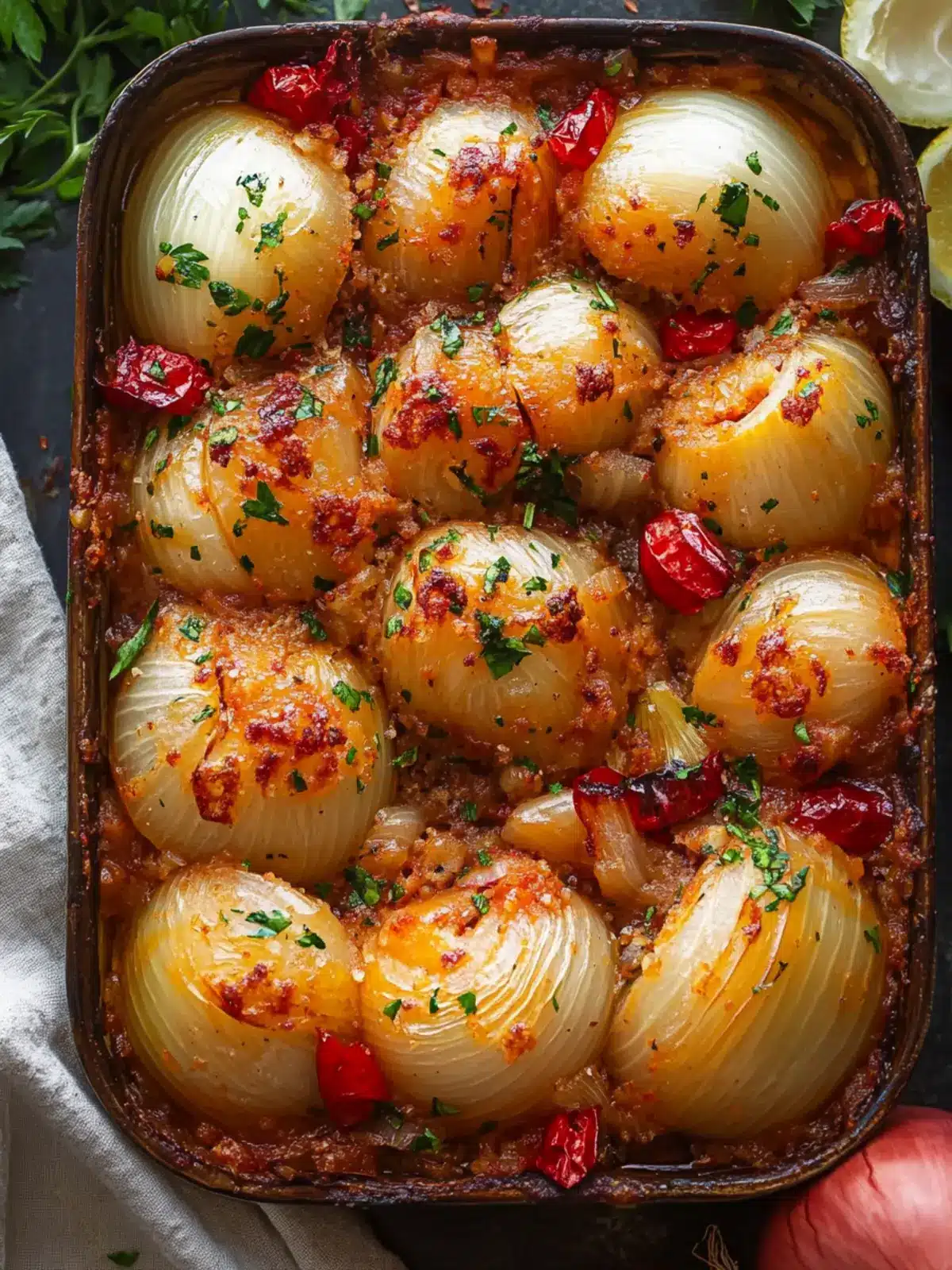
What to Serve with Middle Eastern Stuffed Onions?
Elevate your culinary experience by pairing these delightful stuffed onions with sides that enhance their warm, spiced flavors.
-
Greek Yogurt: Creamy and tangy, it provides a refreshing contrast that balances the savory stuffing beautifully.
-
Couscous Salad: Light and fluffy, this salad can include herbs, nuts, and dried fruits for a textural companion that complements the dish’s richness.
-
Roasted Vegetables: Sweet roasted carrots or zucchini add a caramelized flavor that harmonizes perfectly with the tender onions.
-
Pita Bread: Warm, soft pita is ideal for scooping up the stuffed onions and soaking up the delicious sauce, making each bite a flavorful delight!
-
Fresh Tabbouleh: A vibrant salad bursting with parsley, tomatoes, and lemon juice, it adds a refreshing crunch that balances the dish’s richness.
-
Mint Tea: This fragrant beverage not only refreshes the palate but also complements the aromatic spices present in the stuffed onions.
-
Hummus: Smooth and creamy, serve it as a dip with pita or alongside the onions for a delightful contrast of flavors.
-
Baklava: End your meal on a sweet note! The flaky and nutty layers of this dessert provide a deliciously indulgent finish.
Consider these pairings to create an unforgettable dining experience that brings the heart of Middle Eastern cuisine to your table.
Make Ahead Options
These Middle Eastern Stuffed Onions are perfect for meal prep and can save you time during busy weeknights! You can prepare the filling and stuff the onions up to 24 hours in advance—simply cover and refrigerate them. This allows the flavors to meld beautifully and makes your cooking process smoother. If you prefer, you can also microwave the stuffed onions and store them in the refrigerator for up to 3 days before baking. To maintain that delicious quality, ensure you store them in an airtight container. When you’re ready to serve, simply bake the prepped onions at 375°F for about an hour, and you’ll enjoy a flavorful and satisfying dish with minimal effort!
Middle Eastern Stuffed Onions Variations
Feel free to explore these delicious alternatives to make this recipe your own, bringing joy to your table with delightful twists!
-
Sweet Onions: Substitute yellow onions with sweet onions for a milder taste that enhances subtle sweetness.
-
Vegetable Medley: Add chopped bell peppers or zucchini to the rice filling for a colorful, nutrient-packed burst of flavor.
-
Meat Option: Incorporate 1 pound of ground beef or lamb into the filling for a hearty, classic version that enriches the dish.
-
Spicier Kick: For those who enjoy heat, increase the amount of Aleppo pepper or add a dash of cayenne for an extra thrill.
-
Whole Grain Rice: Swap out Cal-Rose rice for quinoa or brown rice for a nutty, nutritious alternative while keeping the dish wholesome.
-
Herb Swap: Try fresh basil or cilantro in place of parsley for a refreshing twist that changes the flavor profile beautifully.
-
Cheesy Goodness: Add crumbled feta cheese into the filling mixture for a creamy, tangy addition that elevates the dish.
-
Nutty Crunch: Fold in toasted pine nuts or slivered almonds into the stuffing for added texture and a delightful crunch in every bite.
Expert Tips for Middle Eastern Stuffed Onions
-
Layer Management: Ensure to slice the onions deep enough to create pockets, but avoid cutting all the way through to keep layers intact for stuffing.
-
Flavor Boost: For a richer filling, don’t forget to sprinkle in spices according to your tastes—adjusting the 7 spices or adding more Aleppo pepper for heat can elevate your dish.
-
Rice Precision: Make sure to use short-grain rice like Cal-Rose or sushi rice; long-grain may not bind the stuffing well and result in a loose texture.
-
Moisture Control: Cover the baking dish with parchment and foil during baking to retain moisture, ensuring that your Middle Eastern stuffed onions come out tender every time.
-
Serving Idea: For an added layer of freshness, serve your onions with a side of Greek yogurt or a crisp salad—this balance enhances the dish’s rich flavors.
How to Store and Freeze Middle Eastern Stuffed Onions
Fridge: Store leftovers in an airtight container for up to 3 days. This helps retain their flavors while keeping them fresh and safe to eat.
Freezer: For longer storage, freeze stuffed onions in a tightly sealed container or freezer bag for up to 3 months. Thaw overnight in the fridge before reheating.
Reheating: Gently reheat in the microwave or oven until heated through, adding a splash of water or sauce to retain moisture. Enjoy your Middle Eastern stuffed onions like they were just made!
Covering: Always wrap leftovers tightly or use an airtight container to prevent freezer burn and keep them flavorful.
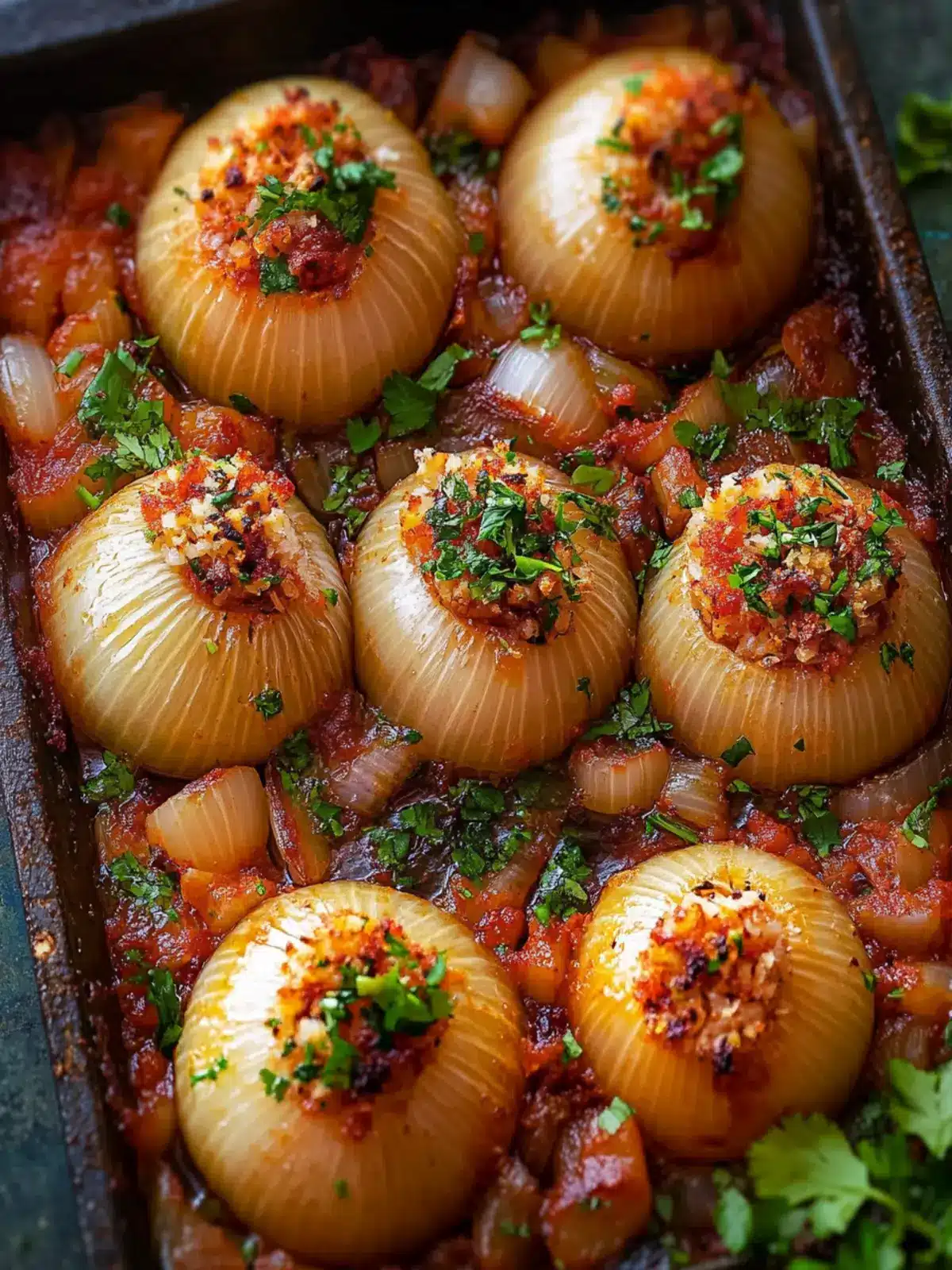
Middle Eastern Stuffed Onions Recipe FAQs
What type of onions should I use for stuffing?
I recommend using large, firm yellow onions as they provide the perfect structure for stuffing while becoming soft and tender when cooked. Sweet onions can also be used for a milder flavor.
How should I store leftover stuffed onions?
Store your leftovers in an airtight container in the fridge for up to 3 days. This keeps them fresh and flavorful, making them a perfect option for a quick meal or snack.
Can I freeze Middle Eastern stuffed onions?
Absolutely! To freeze, place the stuffed onions in a tightly sealed freezer bag or container. They can be stored for up to 3 months. When you’re ready to enjoy them, simply thaw overnight in the fridge and reheat in the oven or microwave until warmed through.
What if my onions split while cutting them?
If you accidentally cut through the onion layers, don’t worry! Just be gentle when stuffing them, and try to maintain as much integrity as possible. You can also use these onions in other recipes where appearance isn’t as critical, like soups or casseroles.
Is this recipe suitable for vegetarians?
Yes, the traditional version of Middle Eastern stuffed onions is vegetarian-friendly! If you’d like to operate once again on the heartier side, feel free to add ground beef to your filling for a meat variation.
What are some common mistakes to avoid?
One common mistake is not cutting the onions deeply enough to create the pockets for stuffing. Ensure you remove enough of the inner layers while being careful not to cut all the way through. Also, using long-grain rice can lead to a less cohesive filling; stick to short-grain varieties like Cal-Rose or sushi rice for the best texture.
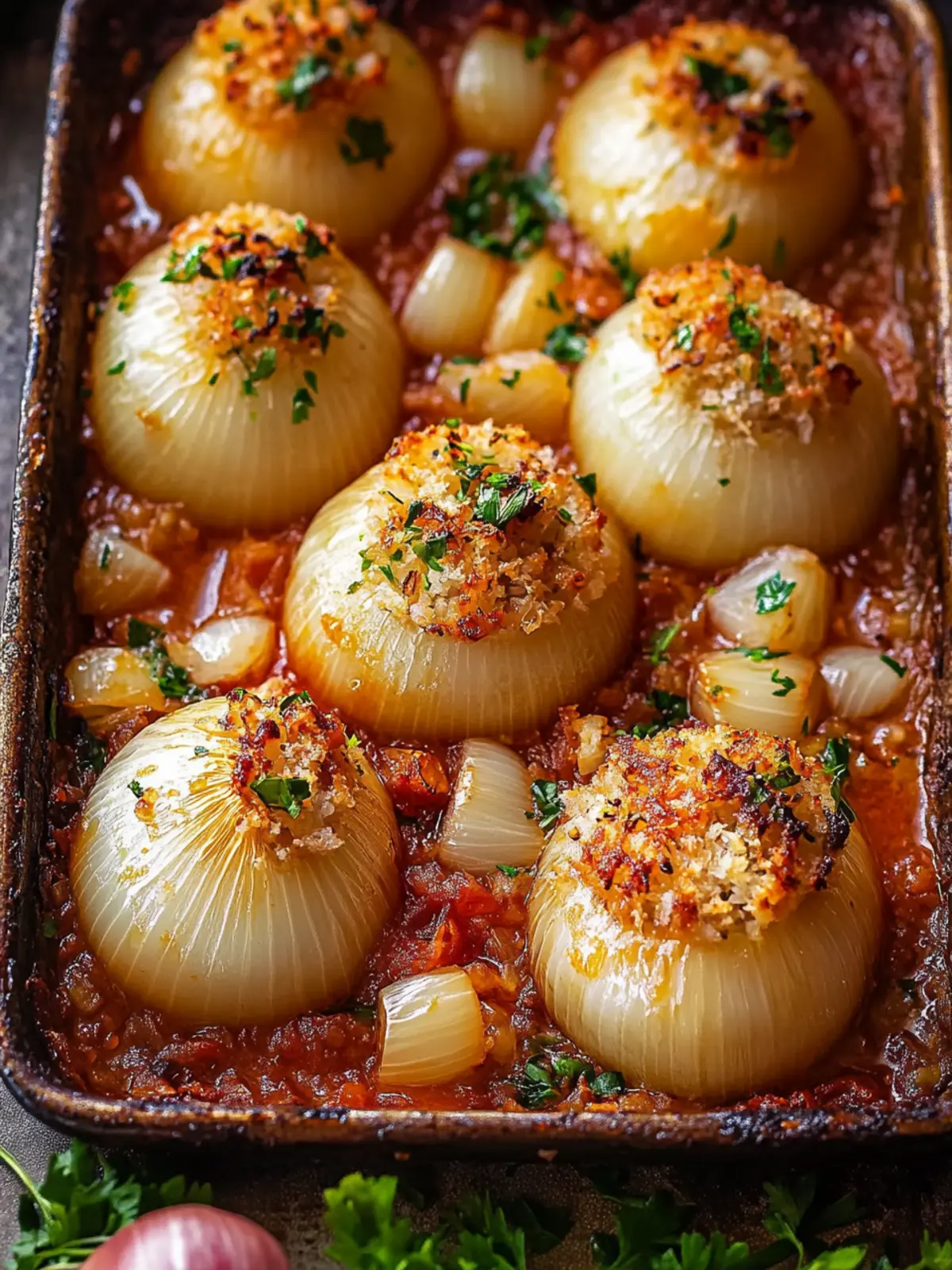
Middle Eastern Stuffed Onions: Easy Flavor-Packed Delight
Ingredients
Equipment
Method
- Trim both ends of the yellow onions and peel off their outer layers. Cut a wedge into each onion to create pockets for stuffing.
- Place the onions in a microwave-safe dish with hot water and microwave for 7-8 minutes until softened. Allow them to cool slightly.
- Rinse the rice under cold water and soak for 15 minutes. Drain and preheat the oven to 375°F.
- In a large bowl, combine soaked rice, chopped parsley, dill, minced garlic, diced tomatoes, and spices. Add pomegranate molasses and olive oil, and mix thoroughly.
- Gently separate the onion layers and fill each with about 2 tablespoons of the rice mixture. Arrange the stuffed onions in a baking dish, standing upright.
- In a bowl, combine tomato sauce, hot water, pomegranate molasses, dried mint, and vegetable stock. Pour sauce over the stuffed onions.
- Cover the baking dish with parchment paper and foil, and bake for 1 hour and 15 minutes until onions are soft and tender.
- Let the onions cool for a few minutes. Serve warm with Greek yogurt or salad.